



By the Water Gone Restoration team · IICRC-certified restoration, Orange County
November 12, 2026
By the Water Gone Restoration team · IICRC-certified restoration, Orange County
November 12, 2026
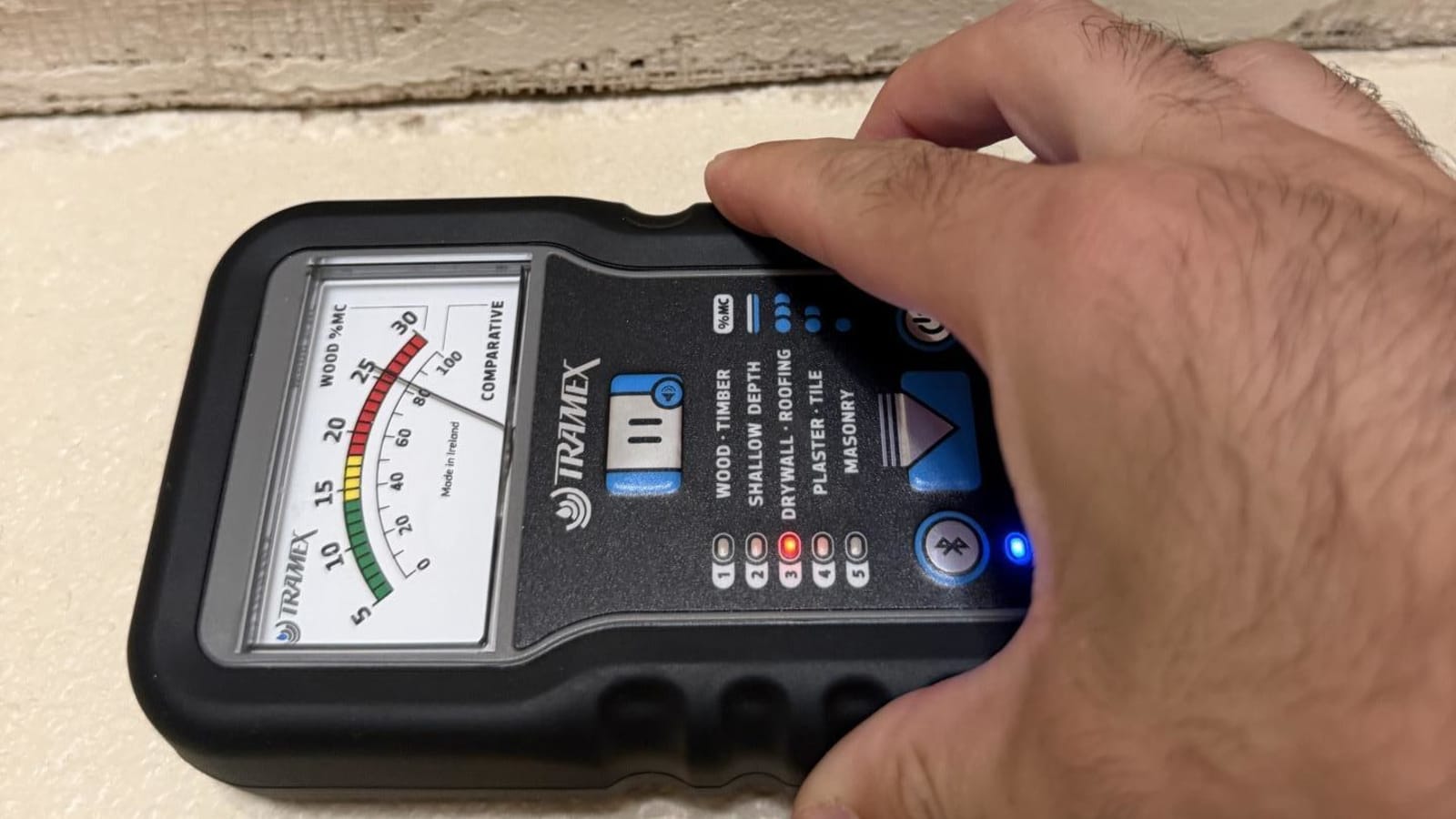
If the first big rain of the season brings water into your Orange County home, catch the drip, move what you can out of its way, take photos and video before anything is cleaned up, and report the leak to your insurer. Then have the wet ceiling, wall or carpet checked and dried, because the water that got in keeps doing damage after the rain stops.
After a long dry summer, the first real storm is the test nobody scheduled. Roofs, flashing, gutters and window seals that looked fine in August meet steady rain for the first time in months, and the weak spots show up inside the house, often at night. This guide covers where those leaks come from, the signs to look for, what to do that first night and how insurance usually treats it.
Months of sun and heat are hard on the parts of a house that keep water out. When the rain finally comes, it finds every gap at once.
These are the usual places rain gets in during an Orange County storm:
A roofer repairs the roof and a window installer reseals the window. Our part is the water that has already come inside.
Rain leaks rarely show up where the water first got in. Water travels along rafters, framing and the top of a ceiling before it shows itself, so a stain in the hallway can come from a roof problem several feet away.
Look for these after the storm, and again a day or two later:
If you find one of these, check the rooms on either side and the attic above if you can get to it safely. Our guide to attic moisture damage in Orange County explains what a wet attic looks like.
A leak that starts at 10 p.m. still needs a plan before morning. These steps take a few minutes each:
Our 24-hour water damage documentation checklist lists exactly what to photograph and what to keep, so this guide does not repeat it here.
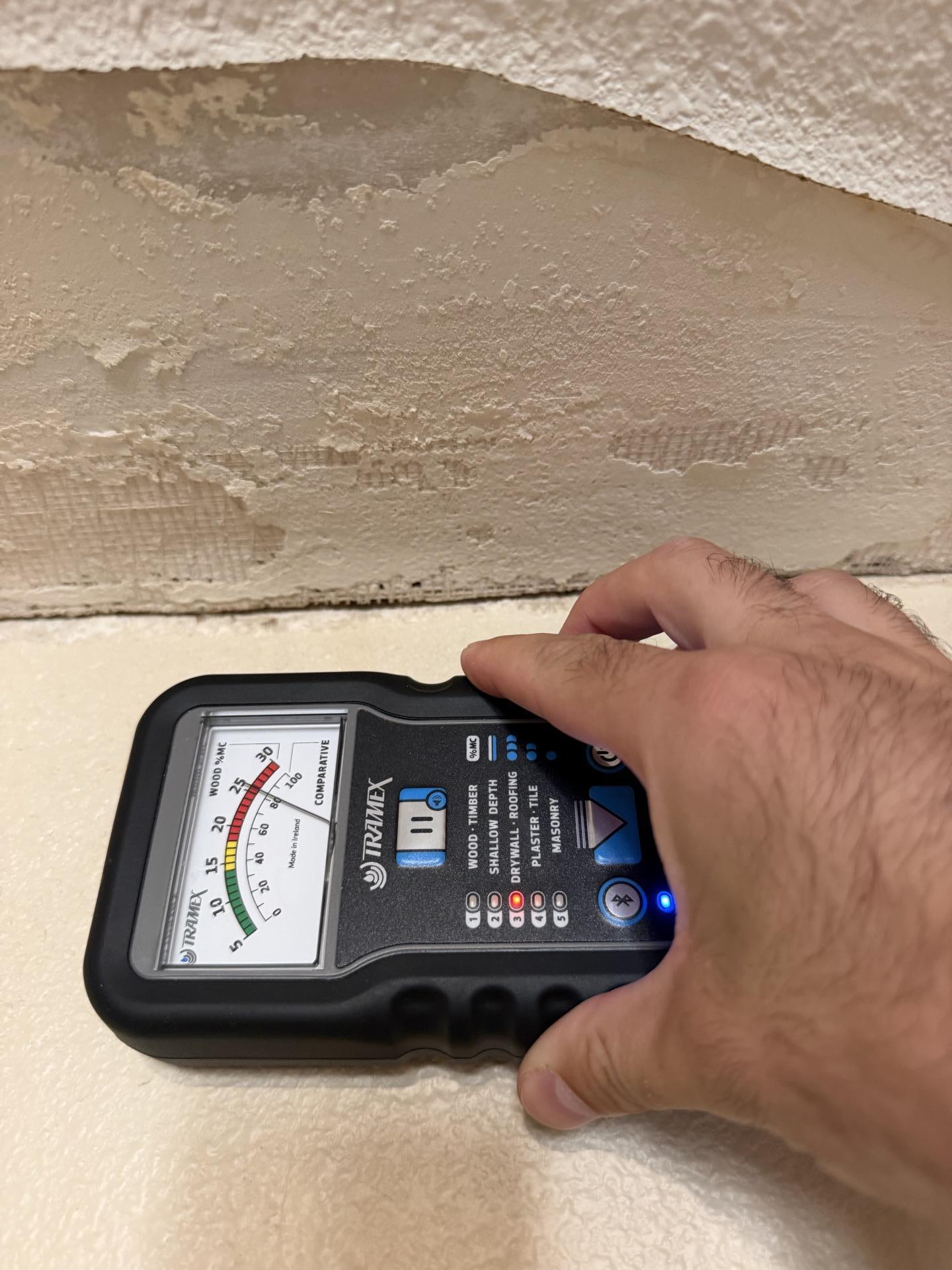
Once the sky clears, it is tempting to wait for the stain to dry on its own. The problem is that the water you can see is only part of it. Rain that soaks a ceiling or wall settles into insulation, wood framing and the back of the drywall, where a fan in the room does not reach it.
Left wet, that hidden water keeps causing damage: drywall softens and crumbles, insulation stays soggy, baseboards and flooring swell, and the musty smell grows. Wet building materials can also lead to mold, which turns a small leak into a bigger job and a harder claim.
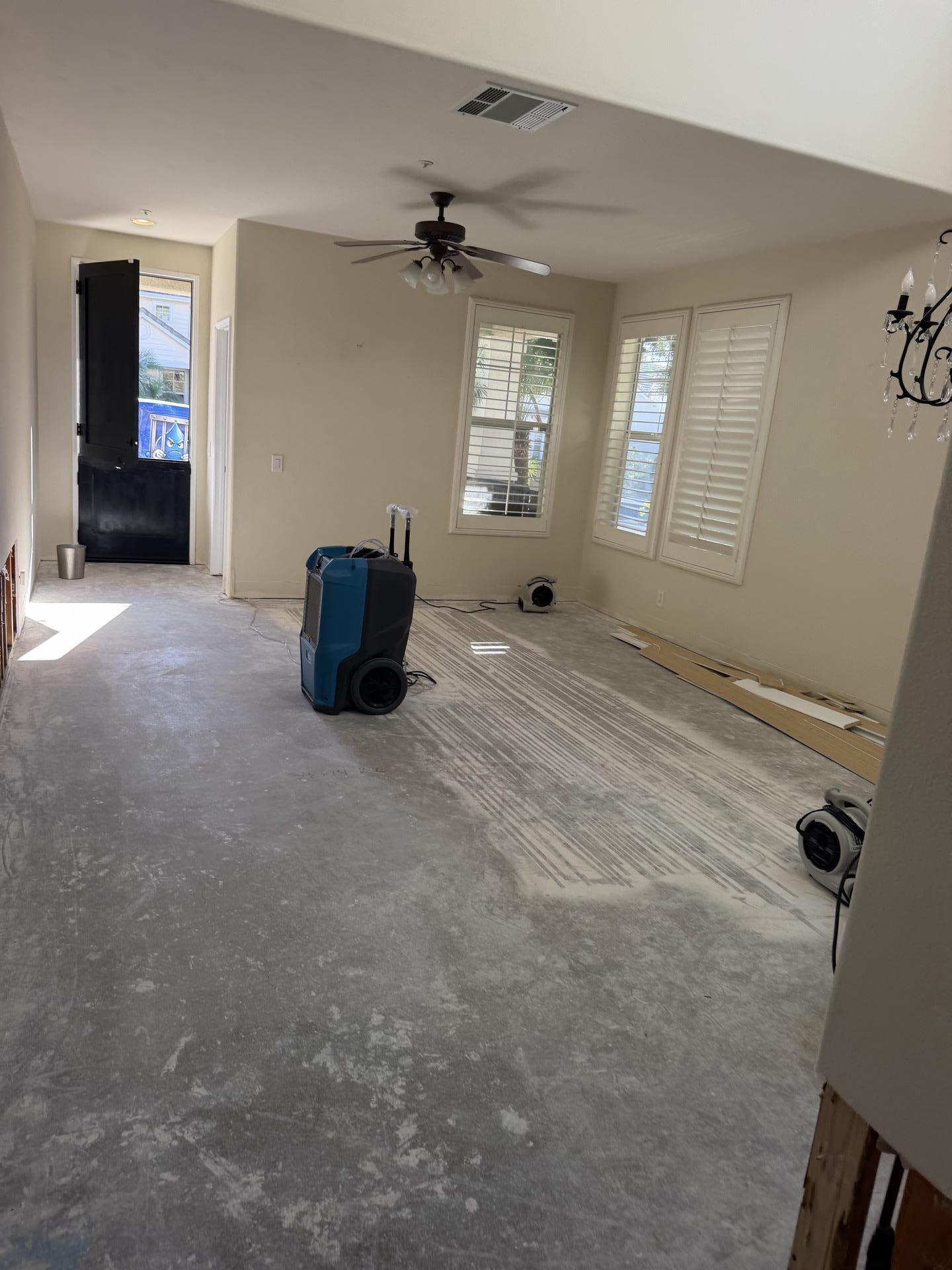
When we dry a rain leak, the work follows the moisture, not the calendar:
Insurance is often where a rain leak gets confusing. Many homeowners policies separate two things: the water damage inside your home and the roof or window that let the water in.
In general terms, sudden water damage inside, such as a soaked ceiling, wet drywall and damaged flooring from a storm, is often covered. The repair of a roof or window seal that failed from age and wear is often not, because policies treat it as maintenance. Some policies also look at whether the storm itself created the opening. Every policy reads differently, so your agent or adjuster is the one to confirm how yours applies.
What helps in every case is a clear record. Photos from the first night, moisture readings from the start of drying and an itemized loss report give the adjuster what they need to separate the inside damage from the roof repair. Our walkthrough of the first 24 hours of a water damage insurance claim covers working with the adjuster step by step.
Water Gone Restoration is owner-led and based in Orange County, and we answer 24/7. When rain gets inside, our certified professionals find where the water went, dry it with industrial truck-mounted extraction and commercial drying equipment, and document every step with photos, moisture readings and an itemized loss report your adjuster can use.
When the loss is covered, we bill your insurance directly, and you pay your deductible, nothing more. The roofer or window installer handles the opening; we handle what the water did inside. Our water damage restoration page explains the full service.
Call Water Gone Restoration 24/7 at (949) 406-0287 for rain leak water damage in Irvine, Huntington Beach, Mission Viejo and across Orange County.
These are the questions Orange County homeowners ask most often when the first rain of the season comes through the ceiling or a window.
Call both, and your insurer too. The roofer stops more water from coming in, and a water damage company dries what is already wet. Drying does not have to wait for the roof repair, and starting it early keeps the damage, and the claim, smaller.
Often the water damage inside is covered when it happened suddenly, while the roof repair itself may not be if the roof failed from age or wear. Policies differ on details like whether the storm created the opening, so ask your agent how yours reads. Good photos and moisture readings help the adjuster make that call.
Probably, yes. A stain can look dry on the surface while the insulation and framing above it stay wet. A moisture check tells you for sure, and it is far easier to dry a ceiling now than to replace one later.
That depends on your deductible and on how far the water spread, which is hard to judge from the stain alone. Document everything the first night either way. A moisture assessment shows the real size of the damage, so you can decide with your agent whether a claim makes sense.
We answer 24/7. Give us your number and a short description of the damage, and an IICRC-certified technician will call you back to schedule a moisture assessment. If it is an emergency, calling is still the fastest route.

