24/7 Emergency Water Damage Restoration in Orange County
When water strikes your Orange County home, every minute matters. Water Gone Restoration is the IICRC-certified water damage restoration company Orange County homeowners trust for fast response, industrial-grade extraction, structural drying, and full insurance claim support.



Comprehensive Water Damage Restoration Services

Rapid water extraction and immediate structural drying to stop further damage. We stabilize the affected area within the first 24 hours to limit secondary damage before it starts.

Commercial-grade LGR dehumidifiers, high-velocity air movers, and thermal imaging cameras dry your structure to verified safe moisture levels inside walls, under flooring, and behind cabinets.

Photos, daily moisture readings, itemized scope of loss, Xactimate-compatible estimates, drying logs, and direct communication with your carrier.
We Work With All Major Insurance Carriers
We document every detail, communicate directly with your adjuster, and make sure your coverage is fully maximized. No surprises. No denials. No paperwork at the worst time of your life.
What we handle on your behalf:
Initial water damage assessment and itemized scope of loss
Daily moisture readings and drying logs required by most California carriers
Photo and video evidence of every affected surface in your home
Direct communication with your adjuster, including site walkthroughs
Negotiation if the carrier disputes scope or pricing
Final completion certificate and invoice submission
Our Water Damage Restoration Process
24/7 dispatch picks up within three rings. We confirm your address, gather initial details, and dispatch the nearest crew with ETA via text.
Crews pre-staged across Orange County. Most addresses in Irvine, Anaheim, Santa Ana, Huntington Beach, Costa Mesa, and Newport Beach see our trucks within 60 minutes.
We assess the damage, identify the water source, document everything with photos and moisture readings, and immediately begin extracting standing water per IICRC S500 standards.
Commercial air movers, LGR dehumidifiers, and HEPA air scrubbers positioned according to a custom drying plan for your specific square footage, water class, and structural materials.
IICRC certified technicians return daily to take moisture readings, adjust equipment, and document drying progress. Most structures reach safe moisture levels within 3 to 5 days.
We don’t pack up until verified moisture readings confirm the structure is dry. Our reconstruction team then handles drywall, flooring, paint, and finish work.
The cost of water damage restoration depends on how much of the home got wet, what kind of water it was, and how long it sat before drying started. A supply line leak caught in an hour costs far less than a slow leak that soaked a wall for weeks.
What moves the price:
Every job gets its own written estimate after an on-site inspection, because no two water losses are the same. Most sudden water losses in Orange County are covered by homeowners insurance, so many homeowners pay only their deductible. We write estimates in Xactimate, the same software adjusters use, so the numbers line up with your claim.
Not every leak announces itself. Slab leaks, slow drips behind walls and failed shower pans can run for weeks before anyone sees water. Call for a moisture inspection if you notice:
We use thermal imaging cameras and moisture meters to trace water to its source without opening walls first.
The IICRC S500 standard sorts water losses into four classes based on how much water there is and how deeply it soaked in. The class decides how much drying equipment goes in and how long it runs.
| Class | What it looks like | Typical drying approach |
|---|---|---|
| Class 1 | Small area, mostly low-porosity materials | Few air movers, short drying time |
| Class 2 | A whole room, carpet and pad wet, water wicking up walls | Extraction plus air movers and LGR dehumidifiers |
| Class 3 | Water from above: ceilings, walls, insulation and floors saturated | Full room setup, often ceiling and wall cavities opened |
| Class 4 | Water trapped in dense materials like hardwood, plaster, concrete or stone | Specialty drying such as drying mats and low-humidity dehumidification |
The class and the category (clean, gray or black water) together set the scope your adjuster will see on the estimate.
Drying a typical room takes about 3 to 5 days, with moisture readings logged every day until materials reach dry standard. Class 3 and Class 4 losses, like water trapped in hardwood or concrete, can take a week or more. Rebuild time depends on what had to be removed. Small drywall and baseboard repairs can wrap up in a few days, while kitchens and flooring replacement take longer.
Proven Results
IICRC
Standard documentation
Moisture logs, scope of work, and photo evidence built to insurer requirements.
100+
Orange County homes restored
10+ years of water damage restoration experience.
60min
Average emergency response
24/7 dispatch and rapid deployment across all of Orange County.
Our Work
A look at our crews and equipment on Orange County jobs.
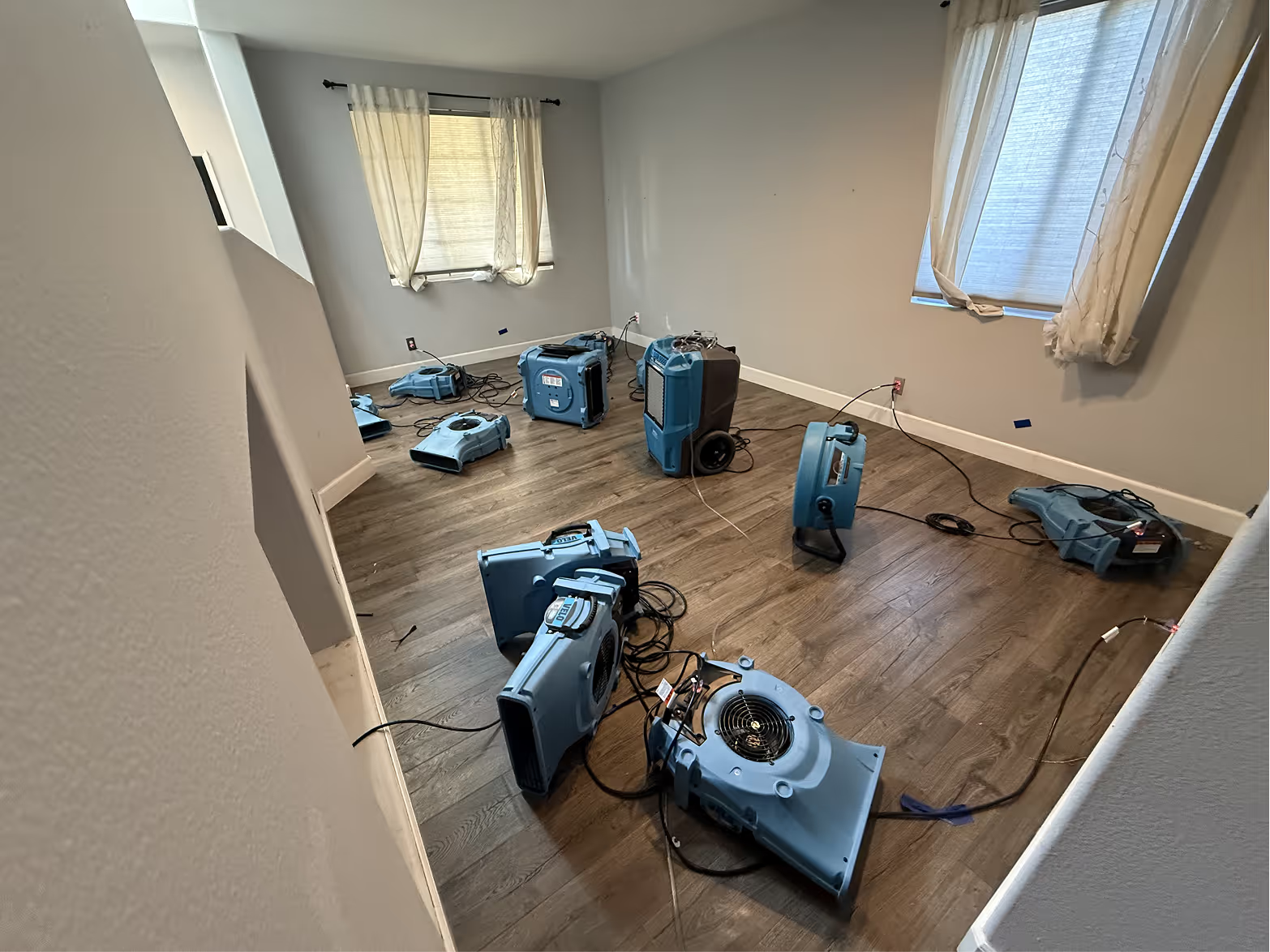
Air movers and a dehumidifier drying a stripped room
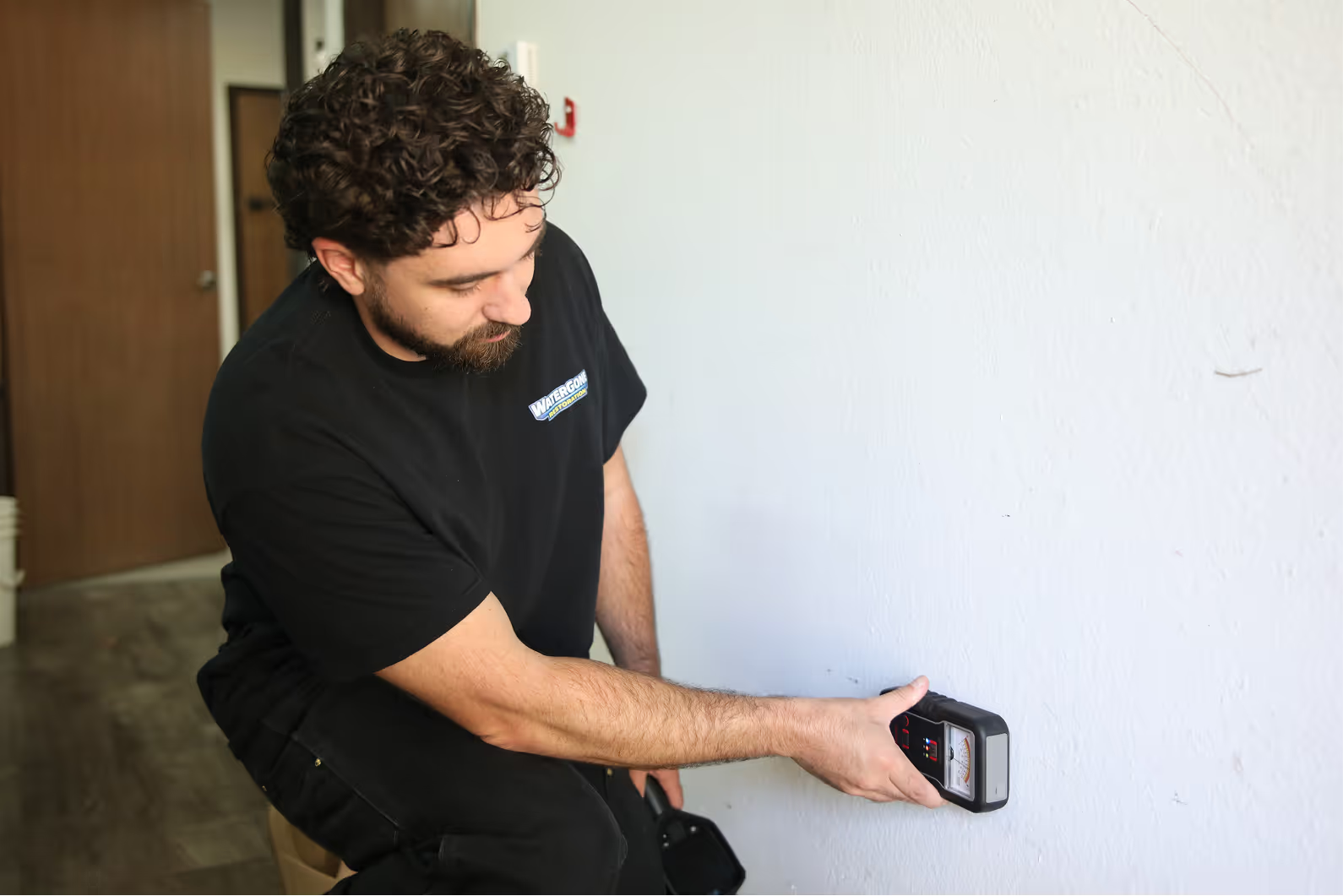
Moisture readings on an affected wall
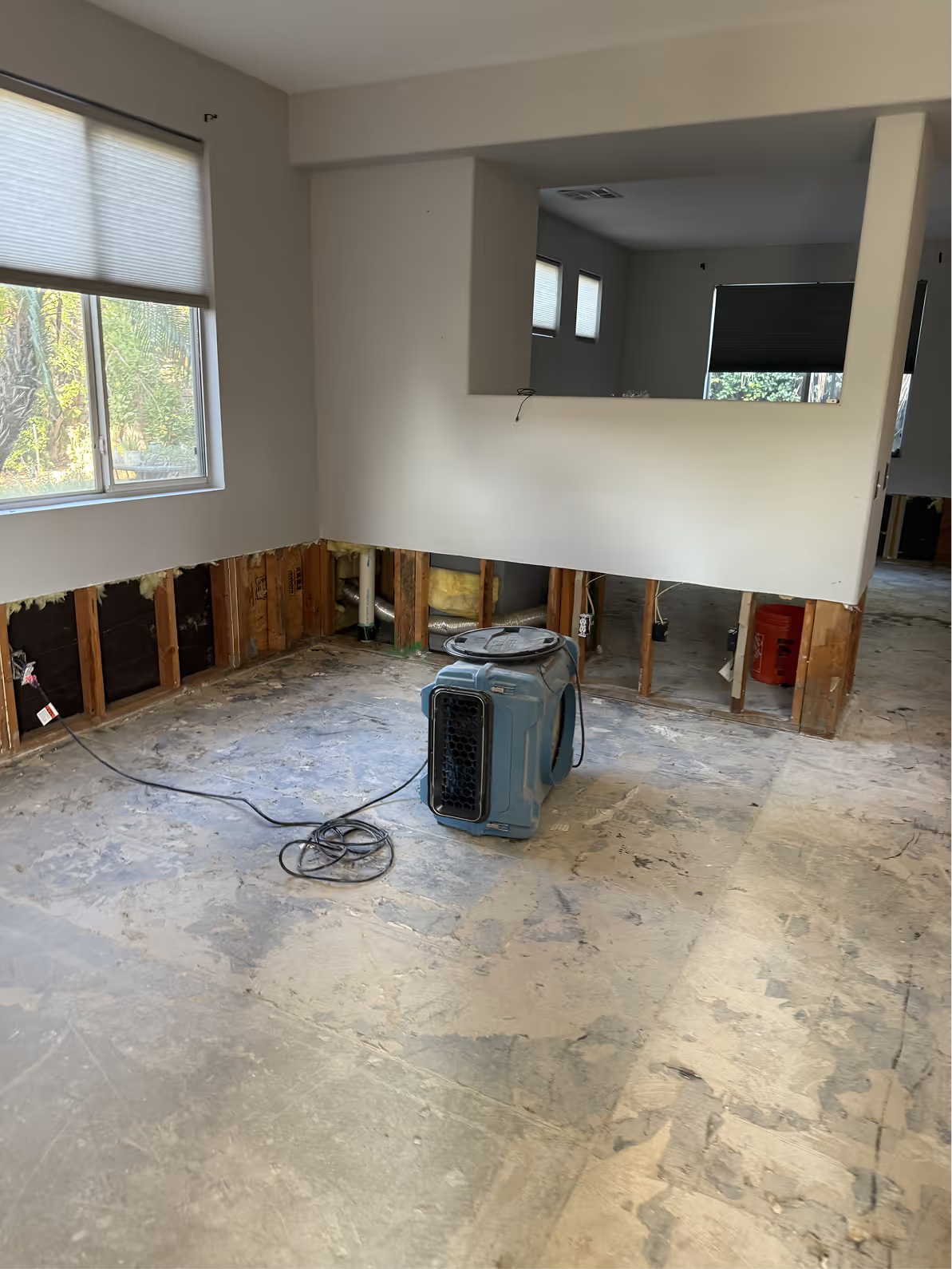
Wet drywall cut out to dry the wall cavity
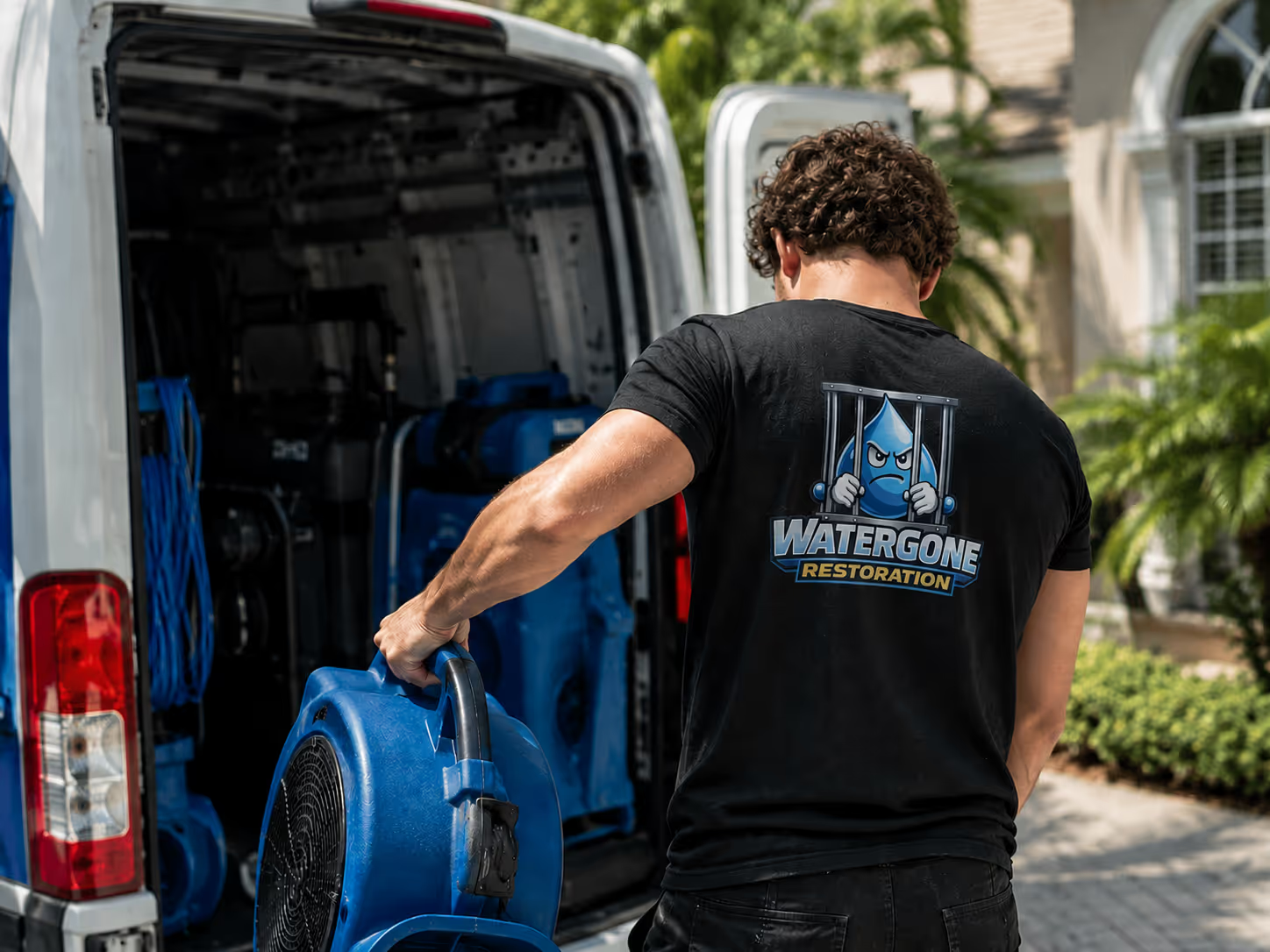
Unloading drying equipment on arrival
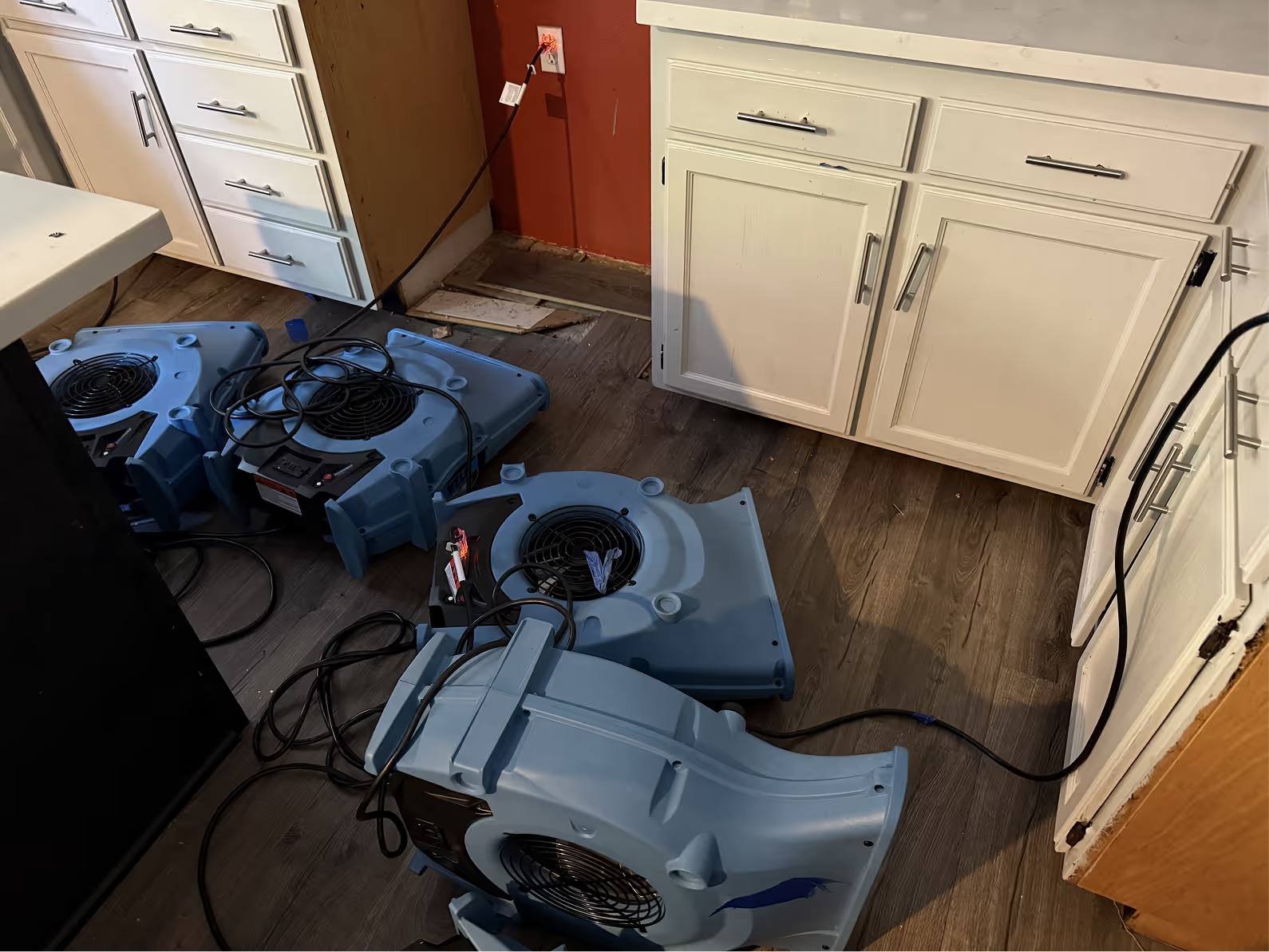
Air movers drying a kitchen floor
Expert Insurance Claim Handling
Most water damage emergencies happen at the worst possible moment and you shouldn’t also have to become an insurance expert at that moment. That’s our job.
From the moment we arrive, we treat the situation as both an emergency restoration project and an insurance claim simultaneously. Every action is documented. Every moisture reading is logged with timestamp and location. By the time your adjuster reviews the file, the case for full coverage is already built.
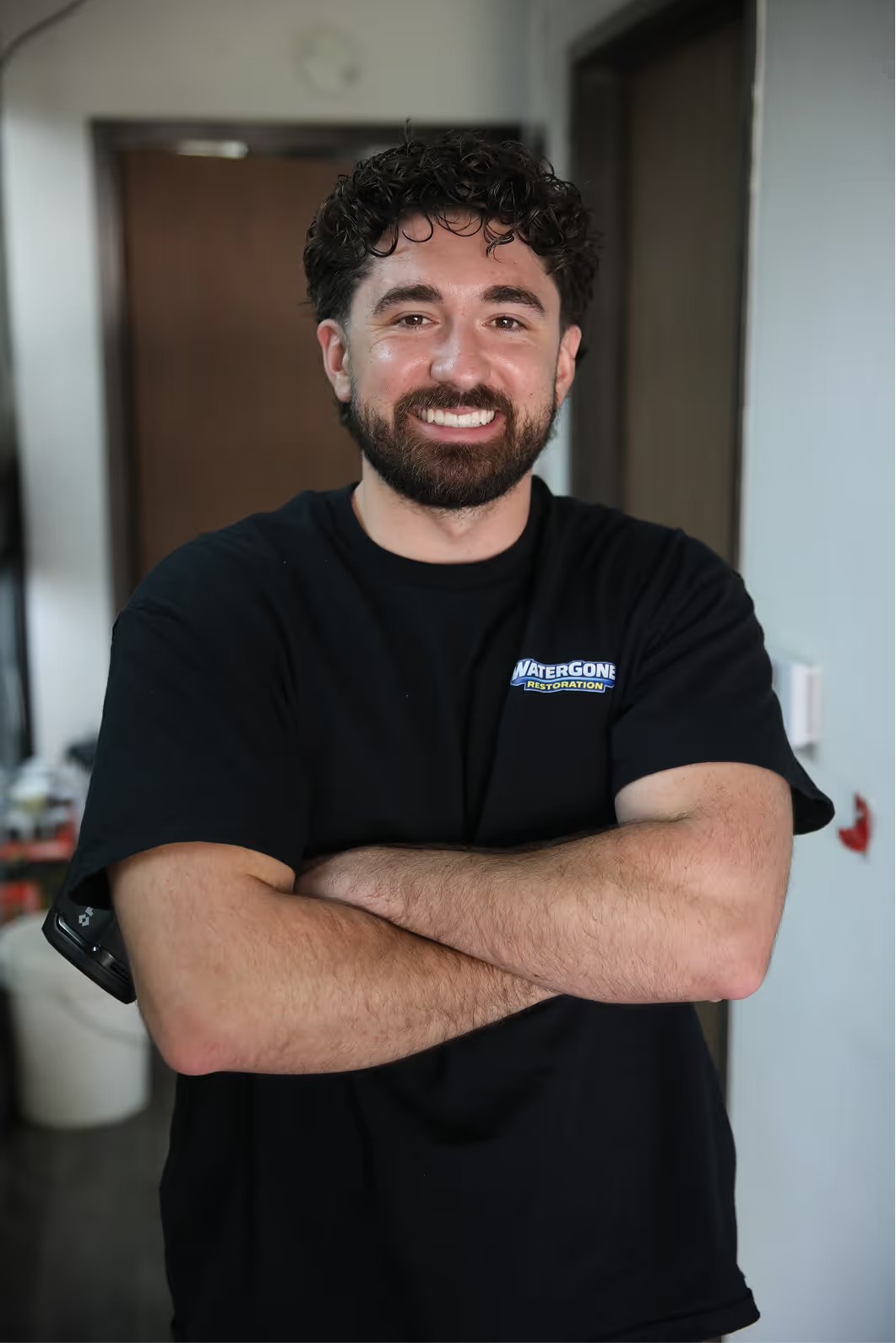

Photos, video, moisture readings, and scope of loss — every detail your adjuster needs.

Required by most California carriers. Timestamped and location-specific.

We handle all carrier communication including site walkthroughs and disputes.

Our documentation package is built to be hard to deny — and we appeal when needed.
No Approval, No Payment From You
We don’t get paid until your insurance claim is approved or your settlement is paid. That alignment is intentional. Our incentive is to fight for every dollar your policy covers, not to cut corners or rush off the job site.
You pay only your deductible. We bill your insurance company directly for the full scope of work.
No surprise charges or hidden fees. Transparent pricing from day one.
We appeal denials on your behalf. In 10+ years, we’ve reversed the majority of first-pass denials we’ve appealed.
No advanced money out of your pocket. Not before, not during the job.
Our Water Damage Restoration Guarantees

We bill your insurance company directly. You pay your deductible, nothing more. No advanced money out of your pocket.
Call 24/7 — (949) 406-0287 →
We handle all paperwork and communication with your insurance company so you don’t have to fight for your own coverage.
Contact Us For a Free Estimate →
Industrial drying combined with EPA-registered antimicrobial treatment targets the critical 24 to 48 hour window after water damage, when mold is most likely to take hold.

We handle every phase — extraction, drying, mold prevention, and full reconstruction — so you can focus on what matters most.
Water Damage Restoration for Every Property Type

Single-family homes, condos, townhomes, and apartment units throughout Orange County. From small under-sink leaks to whole-home flooding from slab leaks.

Retail spaces, offices, restaurants, and multi-unit commercial properties. We work around your business hours and minimize downtime to protect your revenue.

Burst pipes in one unit often affect three or more. We coordinate with HOAs, property managers, and multiple insurance carriers on a single coordinated restoration project.

Hardwood floor drying, document recovery, content cleaning, electronics recovery, and high-end finish preservation across Orange County’s premium neighborhoods.
Know More
Most water damage in Orange County comes from a few predictable sources:
Burst supply lines & water heater failures
Most water heaters fail by year 10. We see this constantly across OC, especially in homes that haven’t replaced original equipment.
Slab leaks
Pinhole leaks in copper supply lines through concrete slab foundations, common in OC neighborhoods built before 1985.
Appliance supply line failures
Dishwashers, washing machines, and ice maker lines — especially in two-story homes where water cascades through ceilings.
Roof leaks during atmospheric river events
Pacific storm systems find every roof weakness. Tile roofs in OC are particularly vulnerable to underlayment failures.
Toilet supply line failures
A failed toilet supply line at 3 AM can dump 50+ gallons per hour into your home until shut off.
Sewer line backups
Older clay laterals in pre-1980s OC neighborhoods fail under heavy rain, causing Category 3 black water backups requiring biohazard protocols.
Shut off the water at the main valve
The main shutoff is usually at the front of the home where the supply enters, or at the street meter.
Turn off electricity to affected areas at the breaker
Don’t enter standing water if you’re unsure whether power is still live.
Photograph and video everything before moving anything
Wide shots and close-ups including the source. These pre-mitigation photos are critical for your insurance claim.
Move valuables and electronics out of the affected area
Books, documents, electronics, family photos — if safe to do so.
Call Water Gone Restoration: (949) 406-0287
Don’t call your insurance first — we’ll handle that conversation alongside you and document everything to protect your claim.
Water damage doesn’t stay still. Within the first hour, water spreads through flooring, baseboards, and wall cavities. Within 24 hours, drywall starts swelling. Within 48 hours, mold begins forming. Within 72 hours, structural materials may be unsalvageable and costs escalate sharply.
The IICRC S500 standard defines emergency water damage mitigation as a 24-hour-from-loss obligation. We meet that standard on every Orange County water damage job, and the documentation we deliver to your adjuster proves it.
Category classification directly determines what your insurance will approve. We classify per S500 on arrival and document the basis.
Category 1 — Clean Water
Sanitary source like burst supply lines. Most materials are salvageable if treated within 24–48 hours.
Category 2 — Gray Water
Significant contamination from appliances or toilet overflow. Drywall and carpet padding typically must be removed.
Category 3 — Black Water
Grossly contaminated from sewage or flooding. All porous materials must be removed as biohazard waste.
Most policies cover sudden and accidental water damage, like a burst pipe, a failed water heater or a broken supply line. They usually exclude flooding from outside water and damage from slow leaks that went on for a long time. We review your policy with you on the first visit.
Usually, yes. Drying equipment is loud and runs around the clock, but most families stay home. Category 3 water, large mold growth or a kitchen out of service can make a short move-out the better choice, and many policies cover additional living expenses.
Yes. We locate the leak with thermal imaging and moisture mapping, coordinate the pipe repair, then dry the slab and restore the flooring and walls it damaged.
Related Restoration Services

Containment, removal, and moisture-source correction when drying alone isn't enough.
Standing-water extraction and structural drying after storm and sewer losses.
How we document the loss and work with your adjuster from the first hour.
We answer 24/7. Give us your number and a short description of the damage, and an IICRC-certified technician will call you back to schedule a moisture assessment. If it is an emergency, calling is still the fastest route.