.svg)
.svg)
.svg)
.svg)
.svg)
By the Water Gone Restoration team · IICRC-certified restoration, Orange County
October 10, 2026
By the Water Gone Restoration team · IICRC-certified restoration, Orange County
October 10, 2026

A water damage claim is won or lost in the first 24 hours. That may sound dramatic, but in Orange County, where slab leaks, burst supply lines, appliance failures, and atmospheric-river storms drive thousands of claims a year, it is simply how the process works. The decisions you make in that first day, what you document, how you dry the home, and how you talk to your insurer, shape whether your claim gets approved for the full cost of the work or gets whittled down and disputed.
The hard truth is that most claims aren’t denied because the damage wasn’t real. They’re denied or underpaid because of gaps in the documentation, missed secondary damage, or a few unfortunate words to an adjuster. The good news is that every one of those failure points is avoidable, and a homeowner who understands the playbook, or who hires a restoration company that lives by it, has a dramatically better outcome.
This is the complete playbook. At Water Gone Restoration, we treat every job as an emergency and an insurance claim simultaneously, and this guide lays out how we approach the first 24 hours: the mold clock and why timing dictates the outcome, the documentation that builds an airtight file, how to work with adjusters, the difference between direct billing and paying out of pocket, the reasons Orange County claims get denied, and why an IICRC-certified restoration company strengthens your position from the very first phone call.
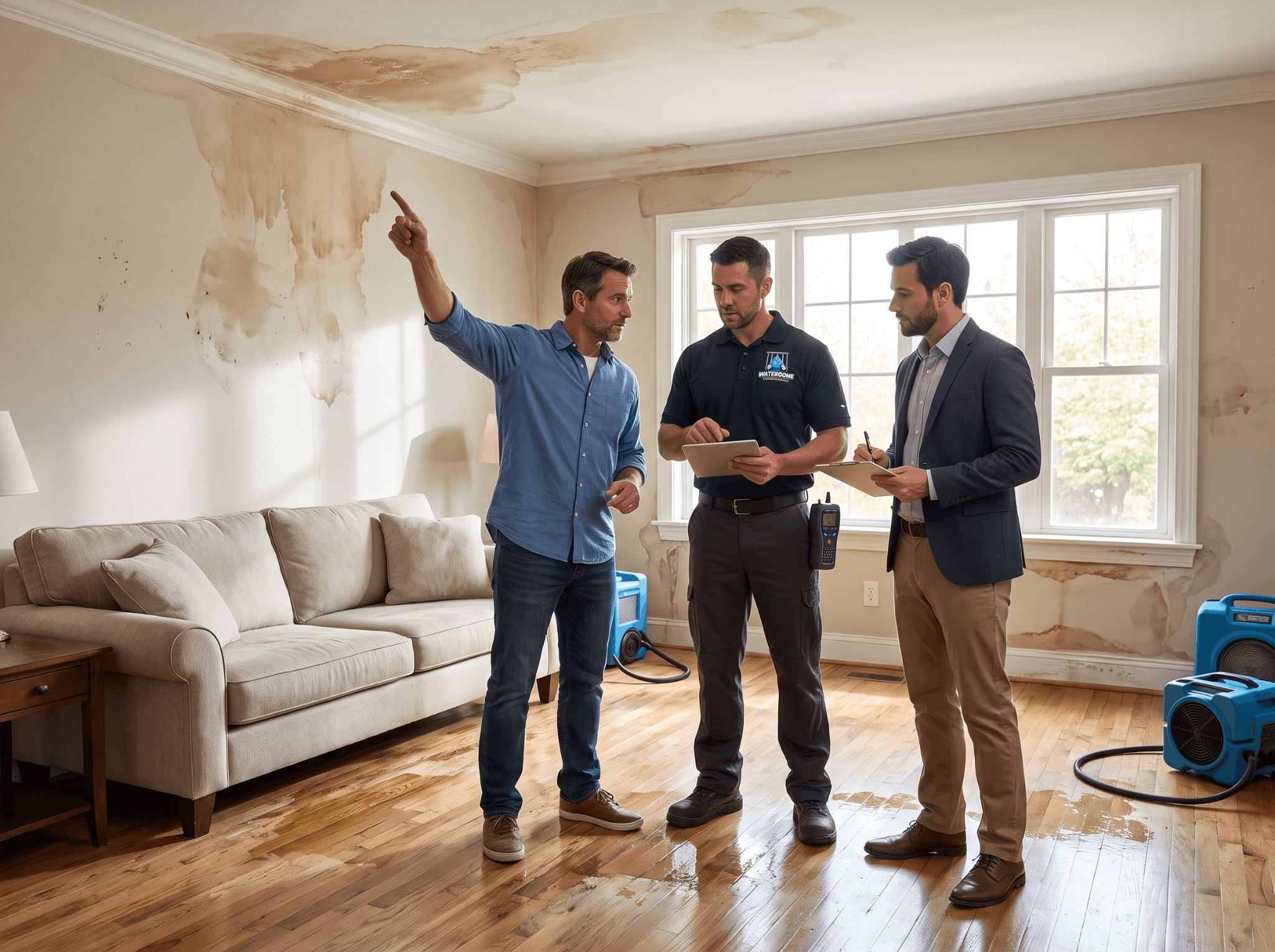
Everything in this playbook is built around a clock that starts the moment water enters your home. Understanding that clock is the key to understanding why speed matters so much, both for your property and for your claim.
The timeline is unforgiving. Within the first hour, water wicks into flooring, baseboards, and wall cavities, spreading well beyond the visible puddle. Within 24 hours, drywall swells and warps and the first signs of deterioration set in. Within 24 to 48 hours, mold can begin to grow in the damp materials, and once that happens, a clean water loss becomes a compounded one. Within 72 hours, some structural materials may no longer be salvageable, and costs climb sharply.
This is why the industry standard, the IICRC S500 standard that governs professional water damage restoration, frames mitigation as a 24-hour obligation from the time of loss. It’s also why insurers expect prompt action: a homeowner who dries the structure quickly limits the damage, and the documentation of that fast response becomes evidence that the loss was handled responsibly. Delay does the opposite. It grows the damage, invites mold, and hands the insurer reasons to question the claim.
The two goals reinforce each other. Fast extraction and drying keep the loss small, and the timestamped record of that work proves you met your responsibility to mitigate. When an adjuster reviews a file showing the crew arrived within the hour, documented everything before touching it, and dried the structure on a monitored schedule, there is very little left to dispute. Speed isn’t just about saving the house. It’s about building a claim that approves itself.
Documentation is the single biggest factor in whether a claim is paid in full, and it is where most homeowners, working alone in a stressful moment, fall short. An adjuster can only approve what is proven, so the goal in the first 24 hours is to prove everything: the cause, the scope, and the extent of the damage, including the parts that can’t be seen.
A complete file has several layers, and each one closes a door that an insurer might otherwise use to reduce the payout. Built together, from the first hour, they form a record that is very difficult to deny.
The reason this works is simple: it removes ambiguity. When the cause is documented, the scope is itemized, and the hidden moisture is mapped and measured, the adjuster is no longer making judgment calls. They’re confirming a case that has already been built. That is exactly the position you want to be in.
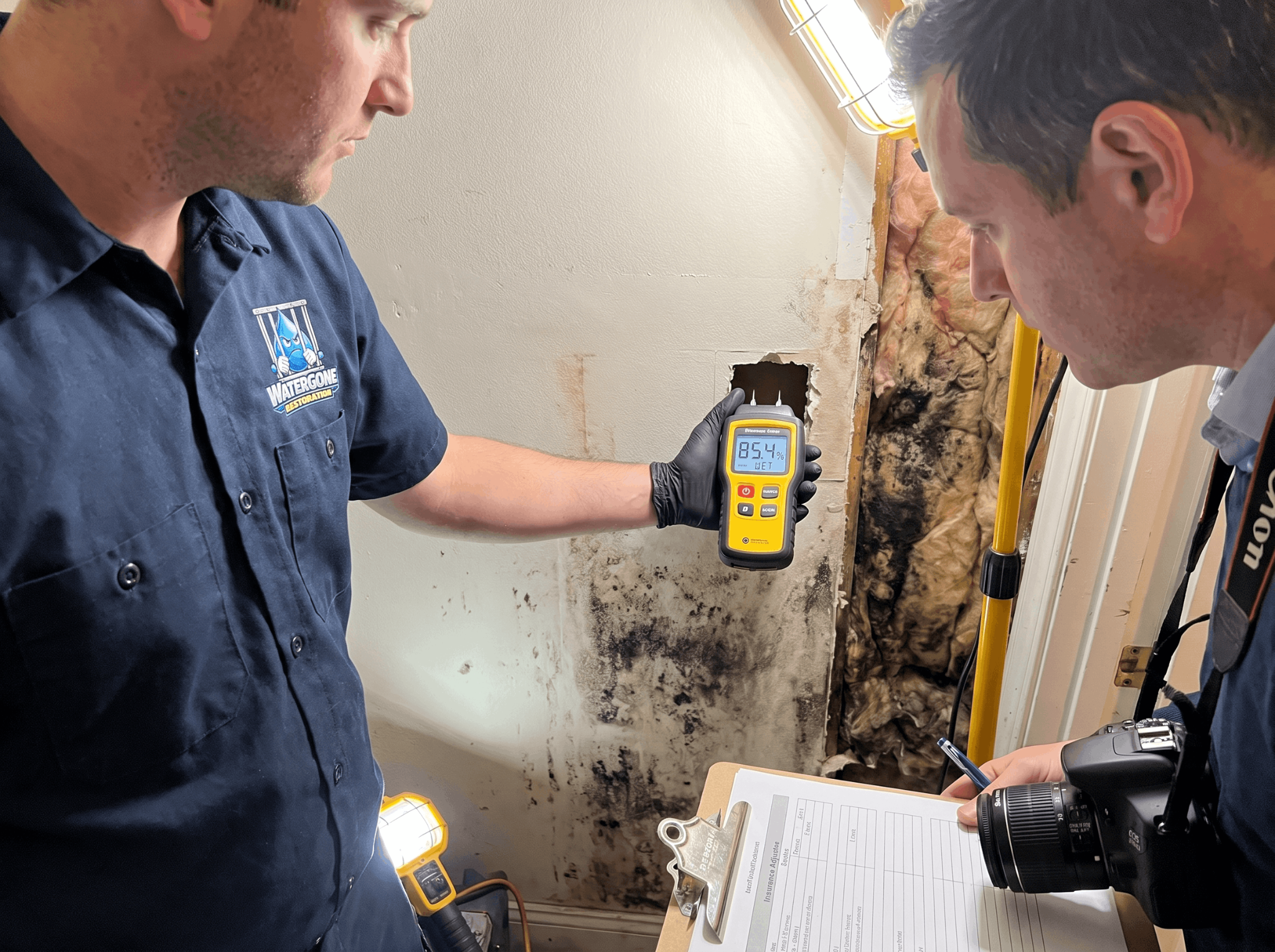
Your insurance adjuster is not your enemy, but it’s important to remember who they work for. The adjuster’s job is to assess the loss on behalf of the insurance company, which means the burden of proving the full scope falls on you. Approaching that relationship well, prepared, factual, and thoroughly documented, makes an enormous difference.
Adjusters are looking for a few key things: a clearly documented cause that fits a covered peril, a scope of damage supported by evidence, and signs that the homeowner mitigated further loss. Give them all three, in an organized file, and the conversation becomes straightforward. What creates friction is the opposite: cleaned-up damage that was never photographed, a vague or inconsistent account of what happened, or materials thrown out before they were recorded.
Just as important is what not to say. Avoid speculating about how long a leak might have been happening, and steer clear of language that suggests deferred maintenance, because phrases like “it’s been slowly leaking for months” can trigger a gradual-damage exclusion. Report the facts: what happened, when you discovered it, and what you did in response. If you don’t know something, say so rather than guessing. And this is where professional insurance claim support earns its keep, because a restoration company that communicates directly with your adjuster can frame the loss accurately and keep the conversation on solid ground.
The best posture with an adjuster is to let the evidence carry the claim. When every affected surface is photographed, every reading is logged, and the scope is itemized to insurer standards, you don’t have to argue, because the file makes the argument for you. That is why we document relentlessly from the moment we arrive: it turns a potential negotiation into a simple confirmation of facts.
One of the biggest sources of stress after water damage is the fear of a huge bill. Homeowners often assume they’ll have to pay for emergency work up front and hope to be reimbursed later. With the right restoration company, that isn’t how it has to go.
The better model is direct insurance billing. Rather than charging you for the full scope and leaving you to chase reimbursement, the restoration company bills your insurance carrier directly for the covered work. In most cases, that means your only out-of-pocket cost is your deductible, with no advance payment required before or during the job. It removes the financial anxiety from an already difficult moment and keeps your focus where it belongs: on your home and your family. If you want to know how this would work for your carrier, get in touch with our team before work begins.
This arrangement also aligns everyone’s incentives. When a restoration company is paid based on the approved claim, its interest is in documenting the full scope thoroughly, not in cutting corners. It’s a very different experience from fronting the money yourself and negotiating alone. Before work begins, a reputable company will walk you through what’s likely covered, how the billing works, and what to expect, so there are no surprises.
Understanding why claims get denied is the best way to make sure yours doesn’t. In Orange County, the reasons cluster around a handful of predictable issues, and nearly all of them trace back to the first 24 hours.
The pattern is clear: most denials are preventable, and they’re prevented in the first day. Documenting the cause, capturing the full scope including hidden damage, drying promptly, and communicating carefully eliminate the great majority of the reasons Orange County claims fall apart. When water damage is severe enough to involve major flooding, the same principles apply to flood cleanup, and the documentation standard only becomes more important.
Not all restoration companies are equal in the eyes of an insurer, and the difference often comes down to certification. IICRC certification, the industry standard set by the Institute of Inspection, Cleaning and Restoration Certification, signals that a company follows recognized protocols for water damage restoration and structural drying, and that carries real weight in a claim.
The practical effect is that certified work is documented to a standard adjusters already recognize and trust. Moisture logs, category classifications, and scope reports built to IICRC guidelines match what insurers expect to see, which reduces friction and disputes. A certified crew classifies the water correctly, dries to verified moisture levels rather than guessing, and produces the kind of technical record that makes a claim hard to challenge. That expertise applies across the board, whether the loss involves water, mold, or even fire and smoke damage, where documentation is just as critical.
There’s also the matter of who’s accountable. At Water Gone Restoration, the work is owner-led, which means the owner personally manages the documentation and adjuster communication on your file from the first photo to final approval. Nothing gets passed off or lost along the way. Combine that accountability with IICRC-certified technicians and a documentation-first approach, and you have the strongest possible footing for a full, fast settlement.
📞 Water damage in Orange County? Call Water Gone Restoration at (949) 406-0287 for 24/7 emergency response, direct insurance billing, and a claim handled from the first photo to final approval.
Immediately. The industry-standard IICRC S500 guideline frames mitigation as a 24-hour obligation from the time of loss, and for good reason. Water spreads within the first hour, drywall swells within 24 hours, and mold can begin growing within 24 to 48 hours. Fast extraction and drying limit the damage and keep your claim clean, and the timestamped record of that quick response becomes evidence that you handled the loss responsibly.
A complete file includes pre-mitigation photos and video of every affected area, the water source, moisture mapping and daily drying logs, an itemized scope of loss, and evidence of the cause. Together these prove the cause, the full scope, and the hidden damage, so the adjuster is confirming a built case rather than making judgment calls. A restoration company that documents from the first hour assembles all of this for you as part of the job.
In most cases, no more than your deductible. With direct insurance billing, the restoration company bills your carrier directly for the covered work rather than charging you the full amount up front. There’s typically no advance payment required before or during the job. This also aligns incentives, since a company paid on the approved claim is motivated to document the full scope rather than only what is visible on the surface.
The most common reasons are gradual leaks or maintenance issues that fall outside coverage, incomplete documentation of the damage, missed secondary damage hidden behind walls and under floors, delayed mitigation that worsened the loss, and miscommunication with the adjuster. Nearly all of these trace back to the first 24 hours, which is why documenting the cause, capturing the full scope, drying promptly, and communicating carefully prevent the great majority of denials.
Yes. IICRC certification means the company follows protocols and documentation standards that insurers already recognize and trust. Certified crews classify the water correctly, dry to verified moisture levels, and produce moisture logs and scope reports built to the guidelines adjusters expect, which reduces disputes. At Water Gone Restoration the work is also owner-led, so the owner personally manages your documentation and adjuster communication from the first photo to final approval.
We answer 24/7. Give us your number and a short description of the damage, and an IICRC-certified technician will call you back to schedule a moisture assessment. If it is an emergency, calling is still the fastest route.
.png)
