 Call 24/7: (949) 406-0287
Emergency Water Damage Response — Orange County, 24/7
Water spreading through your home right now? Call Water Gone Restoration. Our IICRC-certified emergency crews respond 24/7 across Orange County with industrial water extraction, structural drying, and insurance documentation from the first walkthrough.
Send this and we will call you straight back. If water is spreading right now, call (949) 406-0287 instead, we answer 24/7.
.avif)

.avif)
.avif)
.avif)
24/7 Emergency Water Damage Services

Rapid water extraction and immediate structural drying to stop further damage. We stabilize the affected area within the first 24 hours so secondary damage never has a chance to start.
.webp)
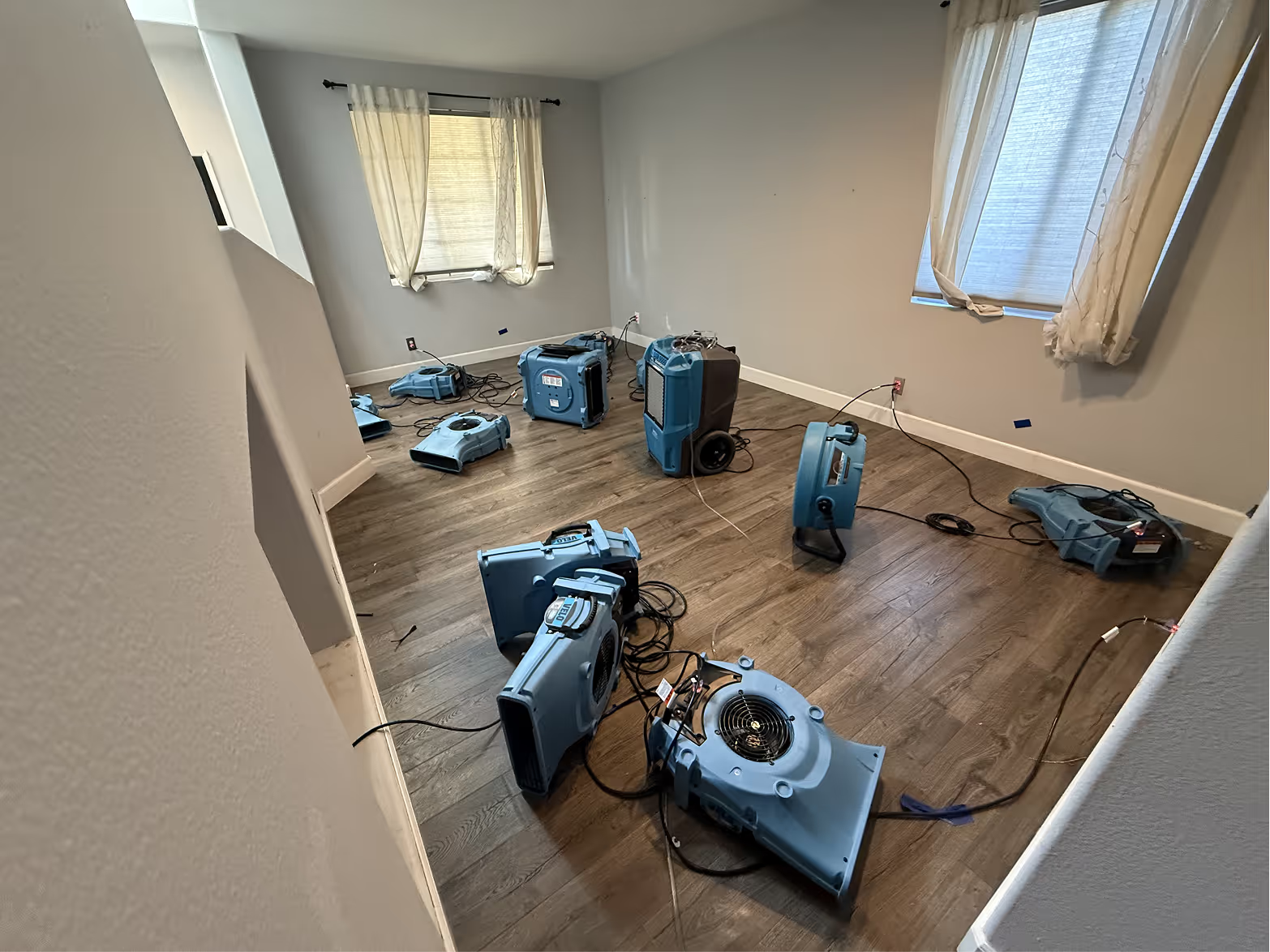
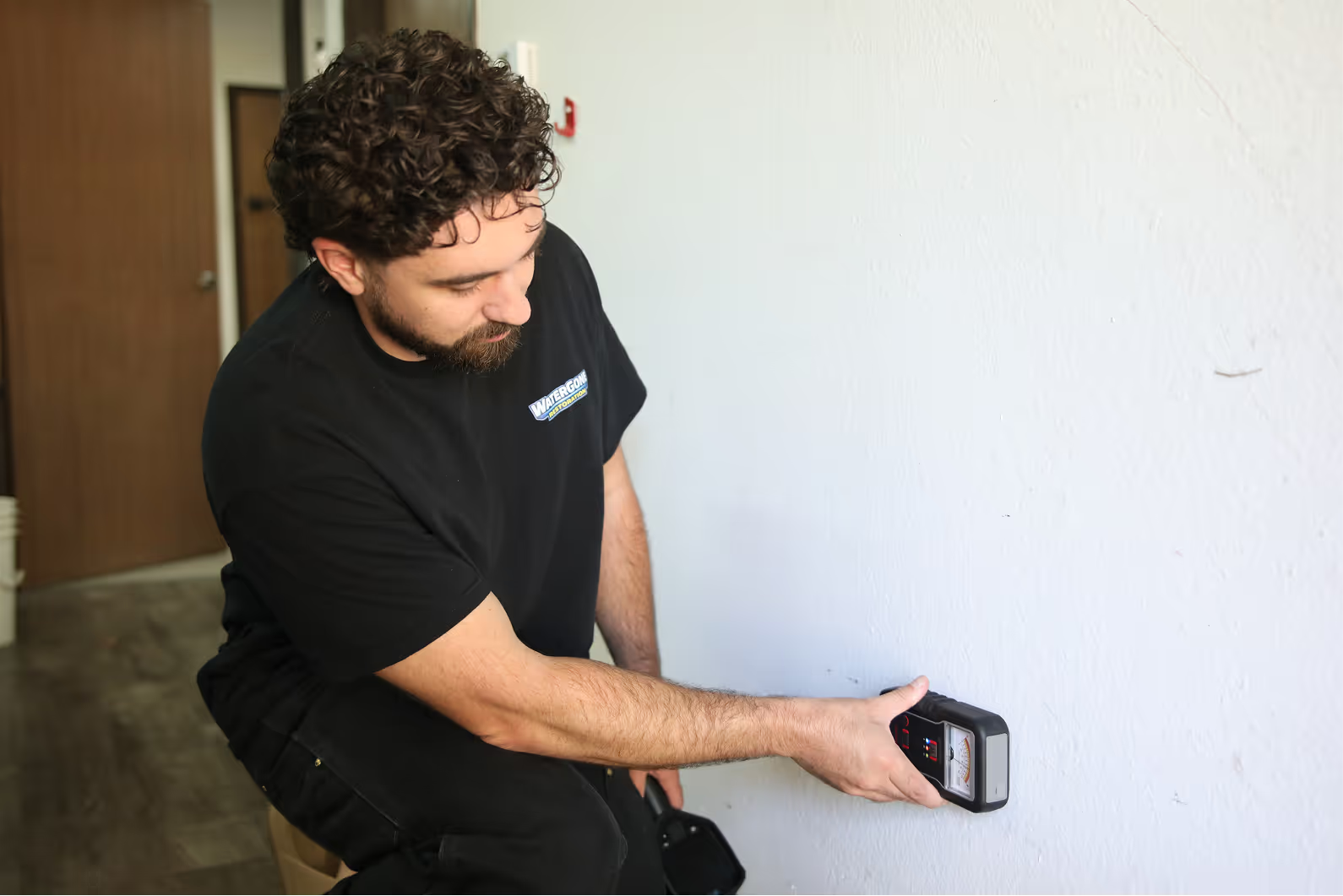
Commercial-grade LGR dehumidifiers, high-velocity air movers, and thermal imaging cameras dry your structure to verified safe moisture levels inside walls, under flooring, and behind cabinets.

Photos, daily moisture readings, itemized scope of loss, xactimate-compatible estimates, drying logs, and direct communication with your carrier.
We Work With All Major Insurance Carriers
A water emergency is also an insurance claim in the making. From the first walkthrough we document every detail, communicate directly with your adjuster, and bill your insurance company directly for covered work — so you can focus on your home, not the paperwork.
What we handle on your behalf:
Initial water damage assessment and itemized scope of loss
Daily moisture readings and drying logs required by most California carriers
Photo and video evidence of every affected surface in your home
Direct communication with your adjuster, including site walkthroughs
Negotiation if the carrier disputes scope or pricing
Final completion certificate and invoice submission
What Happens When You Call
Our emergency line is answered 24/7 — nights, weekends, and holidays. We confirm your address, walk you through immediate safety steps, and dispatch the nearest crew.
Crews are dispatched immediately across all of Orange County — Irvine, Anaheim, Santa Ana, Huntington Beach, Costa Mesa, Newport Beach, and every city in between.
We assess the damage, identify the water source, document everything with photos and moisture readings, and immediately begin extracting standing water per IICRC S500 standards.
Commercial air movers, LGR dehumidifiers, and HEPA air scrubbers positioned according to a custom drying plan for your specific square footage, water class, and structural materials.
IICRC certified technicians return daily to take moisture readings, adjust equipment, and document drying progress. Most structures reach safe moisture levels within 3 to 5 days.
We don’t pack up until verified moisture readings confirm the structure is dry. Our reconstruction team then handles drywall, flooring, paint, and finish work.
Why Orange County Calls Water Gone
24/7
Live emergency dispatch
Real people answer day and night. Water emergencies don't wait for business hours, and neither do we.
20
Orange County cities served
Local crews respond countywide, from Fullerton to San Clemente.
IICRC
Certified restoration firm
Technicians trained and certified to the IICRC S500 water restoration standard.
Expert Insurance Claim Handling
The first hours after a water loss decide two things: how far the damage spreads and how well-documented your insurance claim is. We treat both as the emergency. Every action is documented, every moisture reading is logged with a timestamp and location — so when your adjuster opens the file, the evidence is organized and complete.

Photos, video, moisture readings, and scope of loss — every detail your adjuster needs.

Required by most California carriers. Timestamped and location-specific.

We handle all carrier communication including site walkthroughs and disputes.

A complete, well-documented file helps covered claims move faster — and if the carrier disputes scope, the evidence is already in hand.
Direct Insurance Billing
A 2 AM water emergency shouldn't turn into a financing scramble. For covered losses we bill your insurance company directly for the mitigation work, with transparent, itemized pricing from the first day.
✓ Direct billing to your insurance carrier for covered work — in most covered losses you pay your deductible
No surprise charges or hidden fees. Transparent pricing from day one.
✓ If your carrier disputes scope or pricing, we support your claim with documentation and direct adjuster communication
✓ Free estimate and moisture inspection before mitigation work begins
What Every Emergency Call Includes

We bill your insurance company directly for covered work, with transparent itemized pricing — no surprises added to an already stressful day.
Call 24/7 — (949) 406-0287 →
We handle all paperwork and communication with your insurance company so you don’t have to fight for your own coverage.
Contact Us For a Free Estimate →
Industrial drying combined with EPA-registered antimicrobial treatment prevents mold growth within the critical 24 to 48 hour window after water damage.

We handle every phase — extraction, drying, mold prevention, and full reconstruction — so you can focus on what matters most.
Emergencies We Respond To
.webp)
The most common Orange County water emergencies — failed water heaters, pinhole slab leaks, and burst supply lines, from a single room to whole-home losses.

Washing machine, dishwasher, and ice maker line failures — including two-story homes where water cascades through ceilings below.

Fast containment and sanitary cleanup, classified and handled per IICRC S500 protocols.
.webp)
Pacific storm systems find every roof weakness. We extract, dry, and document storm-related interior water damage.
Know More
Most water damage in Orange County comes from a few predictable sources:
Burst supply lines & water heater failures
Most water heaters fail by year 10. We see this constantly across OC, especially in homes that haven’t replaced original equipment.
Slab leaks
Pinhole leaks in copper supply lines through concrete slab foundations, common in OC neighborhoods built before 1985.
Appliance supply line failures
Dishwashers, washing machines, and ice maker lines — especially in two-story homes where water cascades through ceilings.
Roof leaks during atmospheric river events
Pacific storm systems find every roof weakness. Tile roofs in OC are particularly vulnerable to underlayment failures.
Toilet supply line failures
A failed toilet supply line at 3 AM can dump 50+ gallons per hour into your home until shut off.
Sewer line backups
Older clay laterals in pre-1980s OC neighborhoods fail under heavy rain, causing Category 3 black water backups requiring biohazard protocols.
Shut off the water at the main valve
The main shutoff is usually at the front of the home where the supply enters, or at the street meter.
Turn off electricity to affected areas at the breaker
Don’t enter standing water if you’re unsure whether power is still live.
Photograph and video everything before moving anything
Wide shots and close-ups including the source. These pre-mitigation photos are critical for your insurance claim.
Move valuables and electronics out of the affected area
Books, documents, electronics, family photos — if safe to do so.
Call Water Gone Restoration: (949) 406-0287
Don’t call your insurance first — we’ll handle that conversation alongside you and document everything to protect your claim.
Water damage doesn’t stay still. Within the first hour, water spreads through flooring, baseboards, and wall cavities. Within 24 hours, drywall starts swelling. Within 48 hours, mold begins forming. Within 72 hours, structural materials may be unsalvageable and costs escalate sharply.
The IICRC S500 standard defines emergency water damage mitigation as a 24-hour-from-loss obligation. We meet that standard on every Orange County water damage job, and the documentation we deliver to your adjuster proves it.
Category classification directly determines what your insurance will approve. We classify per S500 on arrival and document the basis.
Category 1 — Clean Water
Sanitary source like burst supply lines. Most materials are salvageable if treated within 24–48 hours.
Category 2 — Gray Water
Significant contamination from appliances or toilet overflow. Drywall and carpet padding typically must be removed.
Category 3 — Black Water
Grossly contaminated from sewage or flooding. All porous materials must be removed as biohazard waste.
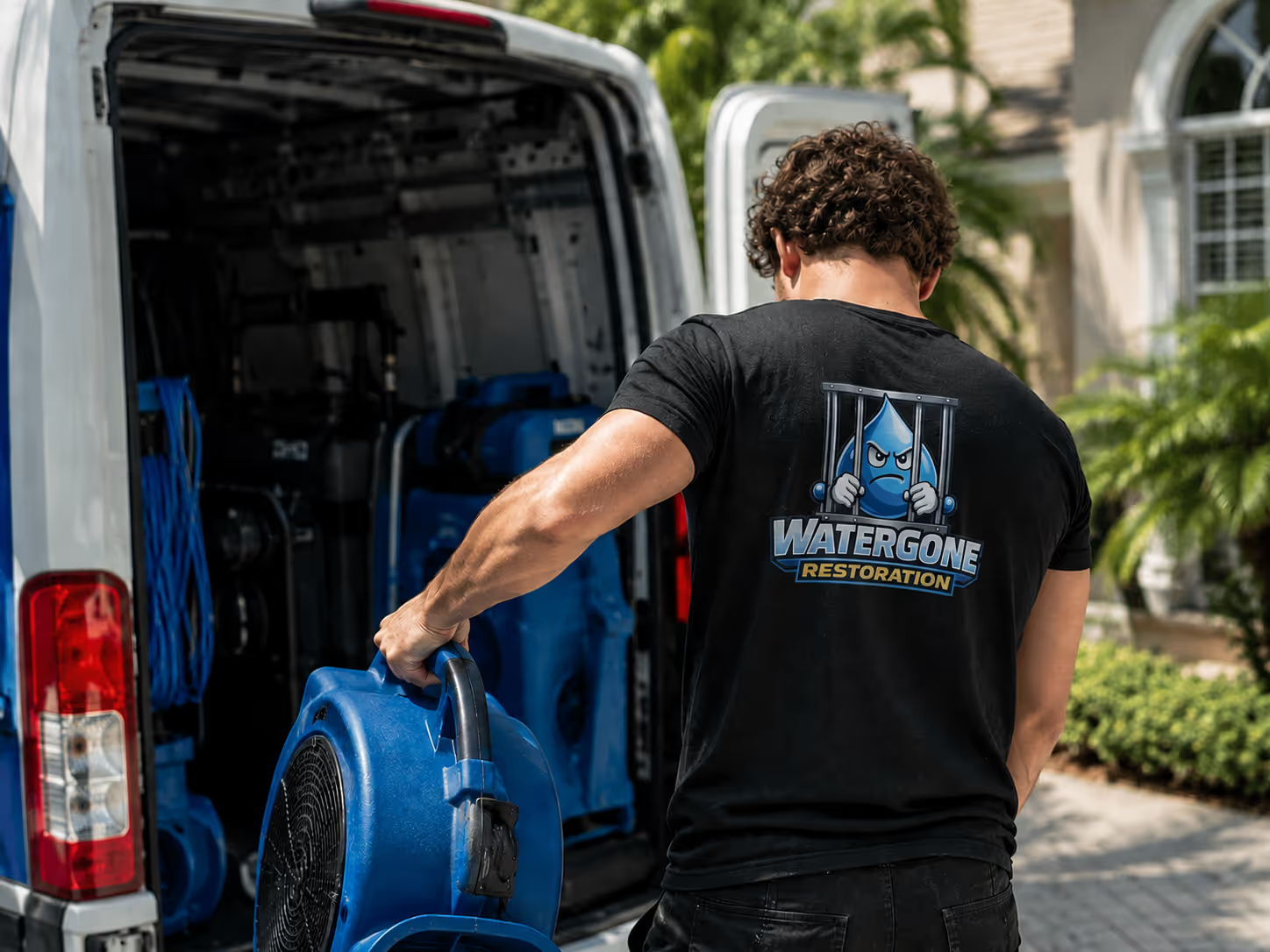
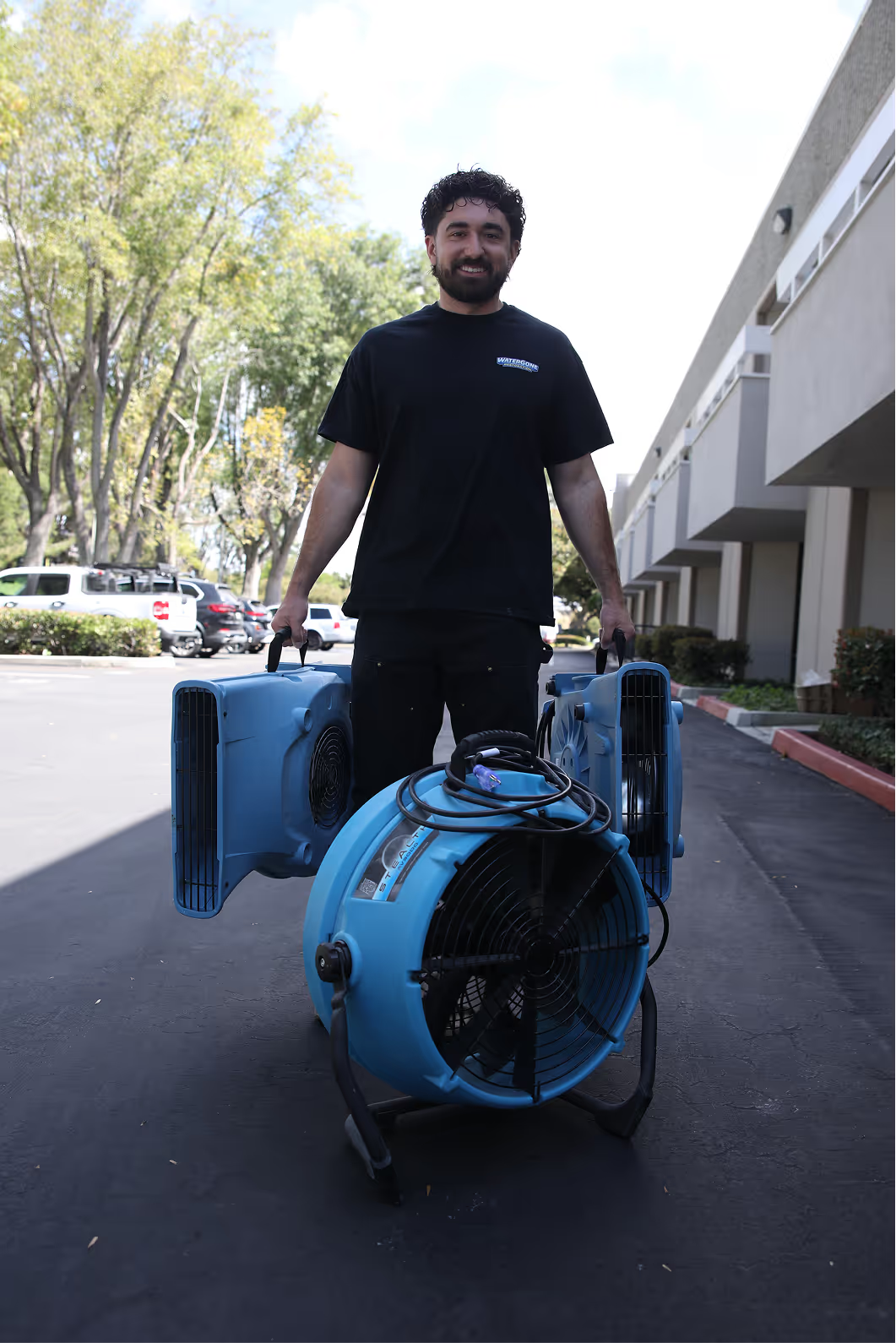
Truck-mounted extraction, commercial air movers, dehumidifiers, and moisture meters on every job. These are our own technicians and our own equipment, not stock photos.
.png)
