


By the Water Gone Restoration team · IICRC-certified restoration, Orange County
October 22, 2026
By the Water Gone Restoration team · IICRC-certified restoration, Orange County
October 22, 2026
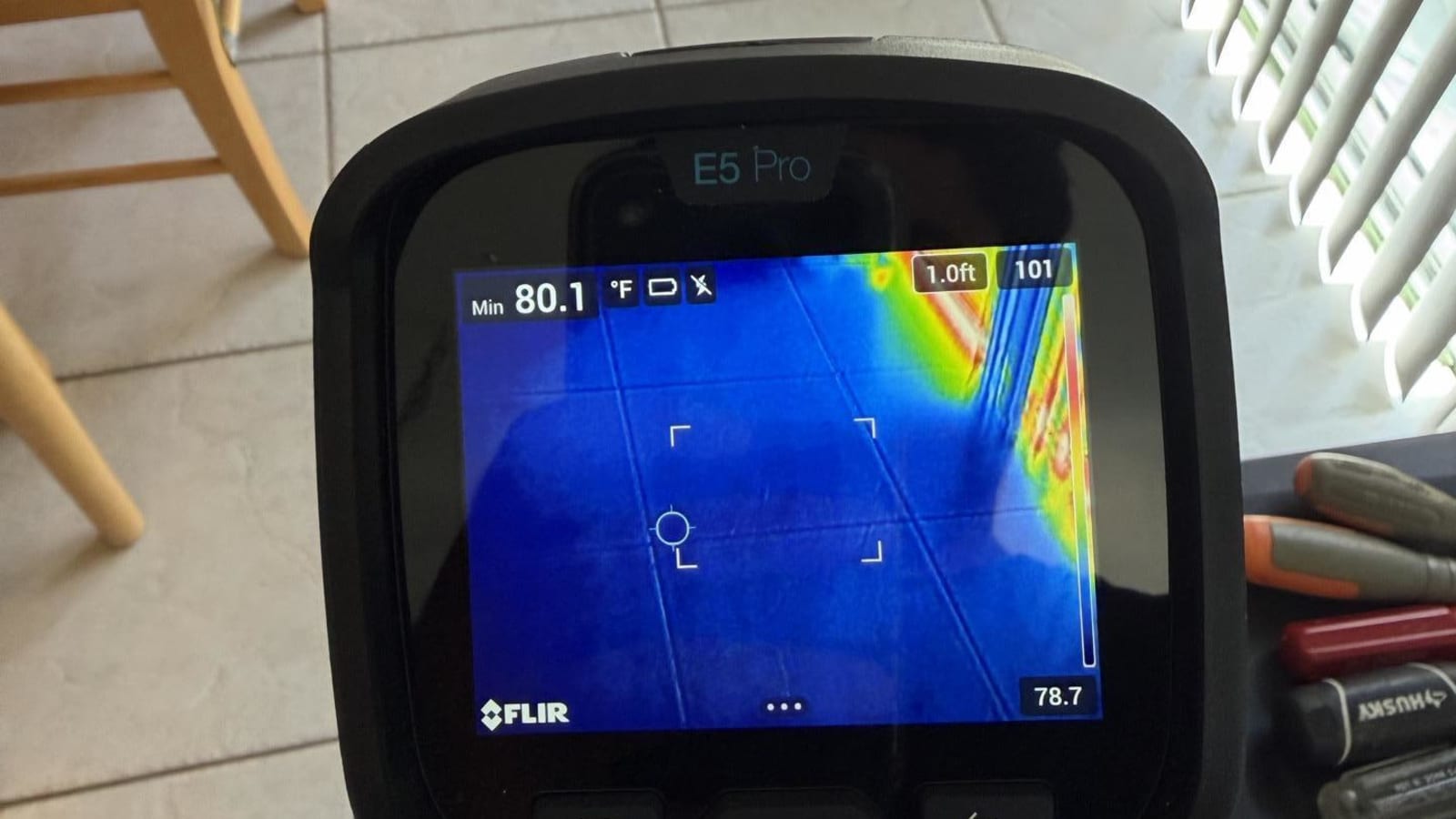
A slab leak is a break in a water line that runs under or inside your home's concrete foundation. The common signs are a warm spot on the floor, the sound of running water when nothing is on, a water meter that keeps moving, and flooring that turns damp or lifts for no clear reason.
Many Orange County homes sit on concrete slabs with the water lines laid under them, so a leak can run for a while before anyone sees it. The water has nowhere to go but up into the flooring, the baseboards and the bottom of the walls. Finding it early keeps a pipe repair from turning into a much bigger drying job.
This guide covers how to spot a slab leak, what to do in the first hour, who handles each part of the fix, and what a homeowners policy usually pays for.
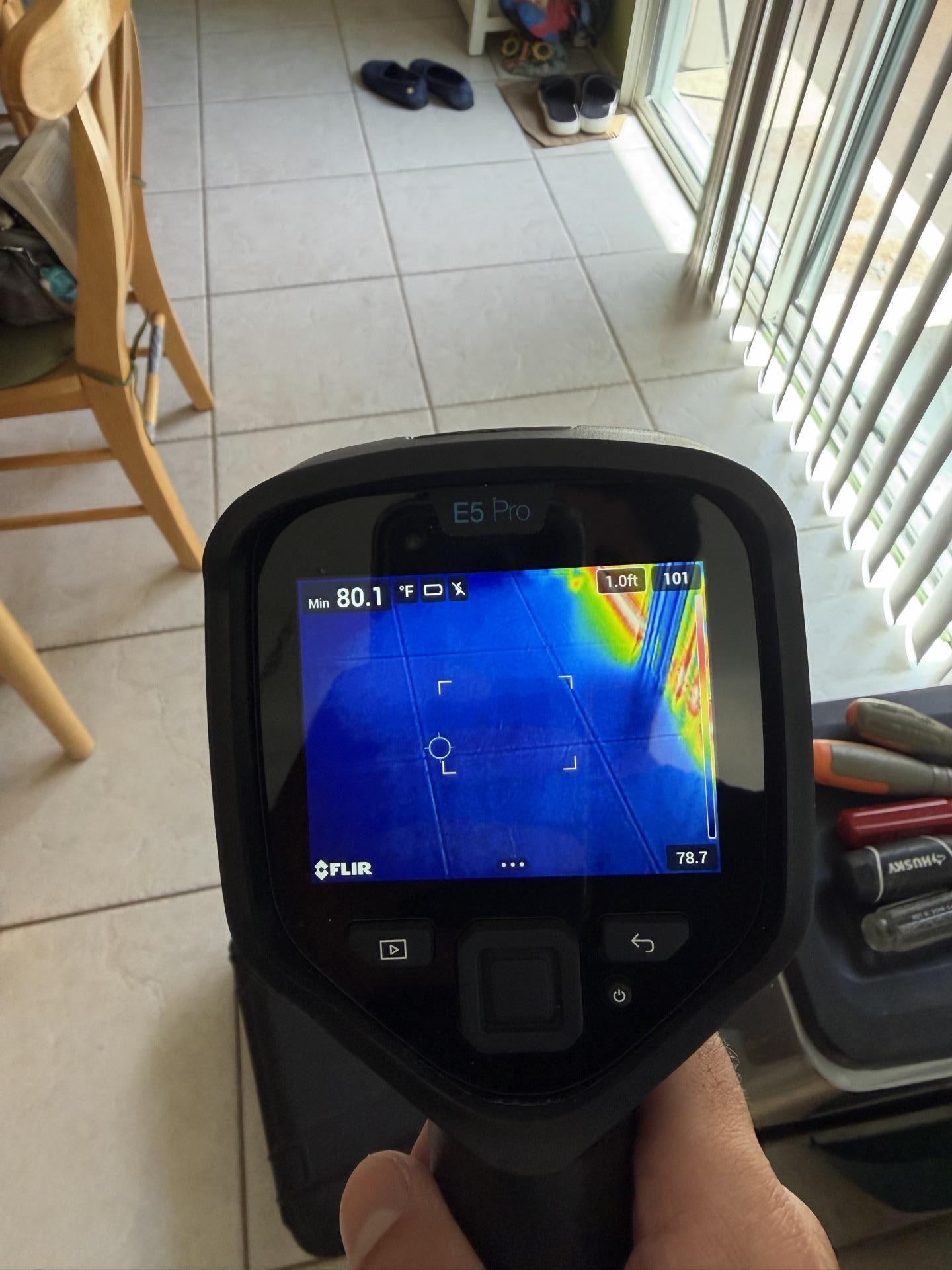
Slab leaks rarely announce themselves with a puddle. Most show up as small changes that are easy to explain away, so it helps to know what to look for.
These are the signs homeowners usually report first:
The water meter is the simplest test you can run yourself. Turn off every faucet, the washer, the dishwasher, the ice maker and the irrigation, then look at the meter by the street. If the dial or the small leak indicator keeps moving, water is going somewhere. A bill that climbs without any change in how you use water points the same way.
If you think you have a slab leak, a few steps right away limit the damage and protect your claim:
Our 24-hour documentation checklist goes through what to photograph and what to say to your insurer in more detail.
A slab leak usually needs two kinds of help, and it is worth knowing which is which.
A licensed plumber locates the leak and repairs it. Depending on where the break is and the condition of the lines, that can mean opening the slab at one spot, rerouting the line through the walls or attic, or replacing a longer run of pipe. The plumber decides which repair fits your home.
Once the water is stopped, the job is to get the slab, the flooring and the walls dry, and to record the damage in a way your adjuster can approve. Our certified professionals take moisture readings to map how far the water spread, set up commercial drying equipment, and check the readings until the structure is dry. We photograph each affected area and put together an itemized loss report, so the claim rests on evidence rather than estimates.
Water under flooring does not dry on its own. Mold can start growing within 48 to 72 hours of the water, which is why drying should begin as soon as the leak is stopped. You can read more about how we work on our water damage restoration page.

Coverage depends on your policy, so read yours or ask your agent. In general, many homeowners policies cover sudden water damage that a slab leak causes inside the home, such as wet flooring, baseboards and drywall. Some policies also pay to open the floor or slab to reach the pipe. The repair of the pipe itself is often treated differently, and leaks that were left for a long time can be excluded as gradual damage.
That last point is why speed and records matter. A claim is easier to approve when the photos, the moisture readings and the dates show the leak was found and dealt with promptly.
We bill your insurance directly, and you pay your deductible, nothing more. We also handle the documentation and the conversations with your adjuster, so you are not left translating between your house and your policy. Our insurance help page explains how that works.
Call Water Gone Restoration 24/7 at (949) 406-0287 for slab leak water damage anywhere in Orange County, from Anaheim and Irvine to Huntington Beach and San Clemente.
These are the questions homeowners ask most often after a slab leak.
It is best not to. Each time the line is under pressure, more water goes under the floor. Keep the main off and turn it on only briefly if you truly need to, then shut it again.
That depends on your insurer and your claim history, and only your agent can tell you for certain. What we can do is make sure the claim you file is clearly documented, so it is handled once and handled correctly.
Most families stay home during drying. The equipment runs around the clock and is noisy, and some rooms may be off limits for a few days. If the damage is wide or the water is not clean, we will tell you plainly whether staying makes sense.
Fans dry the surface, not the slab and the flooring underneath. Moisture left under the floor can lead to mold and to a weaker claim if the damage is reported late. Professional drying equipment and moisture readings show when the structure is actually dry.
We answer 24/7. Give us your number and a short description of the damage, and an IICRC-certified technician will call you back to schedule a moisture assessment. If it is an emergency, calling is still the fastest route.

