



By the Water Gone Restoration team · IICRC-certified restoration, Orange County
November 2, 2026
By the Water Gone Restoration team · IICRC-certified restoration, Orange County
November 2, 2026

There's a particular kind of water damage that's worse than most: the kind that happens while you're away. A supply line fails or a pipe lets go the day after you leave for the holidays, and the water runs unchecked for days, sometimes a week or more, until you walk back through the door to a disaster. By then, what might have been a quick cleanup has become a whole-home water damage restoration project, because nothing stopped the water and no one was there to catch it early. A water shutoff before vacation is the simplest way to prevent it.
This scenario is common during the holidays for an obvious reason: this is when homes sit empty. Families travel, houses go unoccupied for extended stretches, and any plumbing failure that occurs has all the time in the world to do damage. The good news is that preventing it is remarkably simple. A five-minute routine before you leave shuts down the most likely sources of a leak and dramatically reduces the odds of coming home to a flood.
At Water Gone Restoration, some of the most severe losses we see are the ones that ran for days in an empty house, and almost all of them would have been prevented by a few minutes of preparation. This guide covers that pre-travel routine: locating and using your main water shutoff, isolating the ice maker, setting your water heater for vacation, testing your sump pump if you have one, and the smart leak detectors that can watch an unoccupied home for you. Do this before you leave, and you can relax while you're gone.

If you do only one thing before leaving town, do this: shut off the water at the main. It's the most effective step by far, because it addresses every possible plumbing leak at once. No supply line, appliance hose, or pipe can flood your home if there's no water pressure feeding it. Turning off the main is the difference between a plumbing failure that does nothing and one that ruins your house.
The catch is that most homeowners have never located their main shutoff, so the first task is simply finding it. It's usually where the water supply enters the home, often near the front of the house, in the garage or a utility area, or at the street meter. Locate it well before your trip, confirm you can operate it, and make sure it isn't seized from disuse or blocked by stored items. This is worth doing on a calm afternoon, not while you're rushing out the door with the car packed.
For a short trip, shutting off the main is usually all you need. For longer absences, it's the foundation everything else builds on. Once the water is off, you can drain the pressure from the system by opening a faucet or two briefly, which relieves any remaining water in the lines. With the main closed, you've eliminated the vast majority of the risk in a single motion, and the remaining steps simply add extra layers of protection for the appliances and situations the main shutoff doesn't fully cover.
It's common to have lived in a home for years without ever needing the main shutoff, which is exactly why so few people can find it in an emergency. Don't let a trip be the moment you go looking. Find it now, operate it once to confirm it works, and consider labeling it so anyone in the household, or a house-sitter, can shut the water off fast if they ever need to. Five minutes of locating it today can save you from the worst kind of homecoming.
If you're shutting off the main, the refrigerator's ice maker is already covered, but this deserves special mention because of how often the ice-maker line is the culprit in an away-from-home flood. That small water line running to the back of the fridge is one of the most failure-prone connections in the house, and because it's hidden, a leak there can run for days undetected, which is the exact scenario a holiday absence creates.
Behind or near the refrigerator, there's typically a dedicated isolation valve for the ice-maker line. For longer trips, shutting this valve specifically, in addition to the main, is a smart redundancy. Even if the main is off, isolating the ice maker means that when you return and turn the water back on, you can confirm everything is sound before the ice maker starts drawing water again. It's a small step that closes off a disproportionately common source of hidden water damage.
If you can't easily locate the ice-maker isolation valve, that's fine; shutting off the main protects you regardless. But knowing where it is gives you finer control, and it's useful year-round, not just for travel. A leak behind the fridge that goes unnoticed is a prime cause of the kind of trapped, hidden moisture that leads to mold, so keeping that line under control matters beyond the holidays.
With the water shut off, there's no reason for your water heater to keep heating an unused tank for a week, and most water heaters have a setting for exactly this situation. Many units include a "vacation" mode, often marked on the dial, that maintains the tank at a low temperature without fully heating it, saving energy while you're away and reducing wear on the unit.
Setting your water heater to vacation mode before a longer trip is a simple efficiency step that also aligns with having the water off. On a gas unit, look for the vacation or "vac" setting on the control dial; on an electric or newer model, there may be a corresponding mode in the settings. If your heater doesn't have a dedicated vacation setting, simply turning the temperature down for the duration of your absence accomplishes much the same thing.
Beyond the energy savings, this is a good moment to give the water heater a quick look, since it's one of the more consequential appliances in the home if it fails. Check around the base of the tank for any dampness, corrosion, or pooling water before you leave. A water heater showing signs of trouble is worth addressing before a long absence rather than leaving it to potentially fail while no one's home, because a failed tank can release a significant volume of water.
If your home has a sump pump, it's your defense against water intrusion in low-lying areas, and it only helps if it's working when you need it. Since holiday travel can coincide with winter rain in Orange County, an extended absence is precisely when you'd want your sump pump ready, and precisely when a failure would go unnoticed until the damage is done.
Testing a sump pump is straightforward. Pour water into the sump pit to raise the float and confirm the pump kicks on, pumps the water out, and shuts off properly. Make sure the discharge line is clear and directing water away from the house. If the pump is sluggish, noisy, or doesn't activate, that's a problem to resolve before you leave, not after you return to a wet floor. It's also worth confirming the pump is plugged in and receiving power, since an unplugged sump pump is a surprisingly common oversight.
For homes in areas prone to water intrusion, a sump pump that fails during a rainy stretch while you're away can lead to serious flooding and the kind of insurance claim you'd much rather avoid. A two-minute test before a trip confirms this line of defense is ready, and if you're in a flood-prone spot, a battery backup for the pump is worth considering so it keeps working even in a power outage.
The steps above prevent leaks. Smart leak detectors do something different but complementary: they alert you if water shows up somewhere it shouldn't, even when you're hundreds of miles away. For an unoccupied home during the holidays, they add a valuable layer of awareness that turns a silent disaster into an early warning.
These devices have become inexpensive and easy to use. A basic smart water sensor is a small unit you place in the spots most likely to leak (under sinks, near the water heater, behind the refrigerator, by the washing machine), and it sends an alert to your phone the moment it detects moisture. Some more advanced systems can even automatically shut off your water supply when they detect a leak, combining detection and prevention in one.
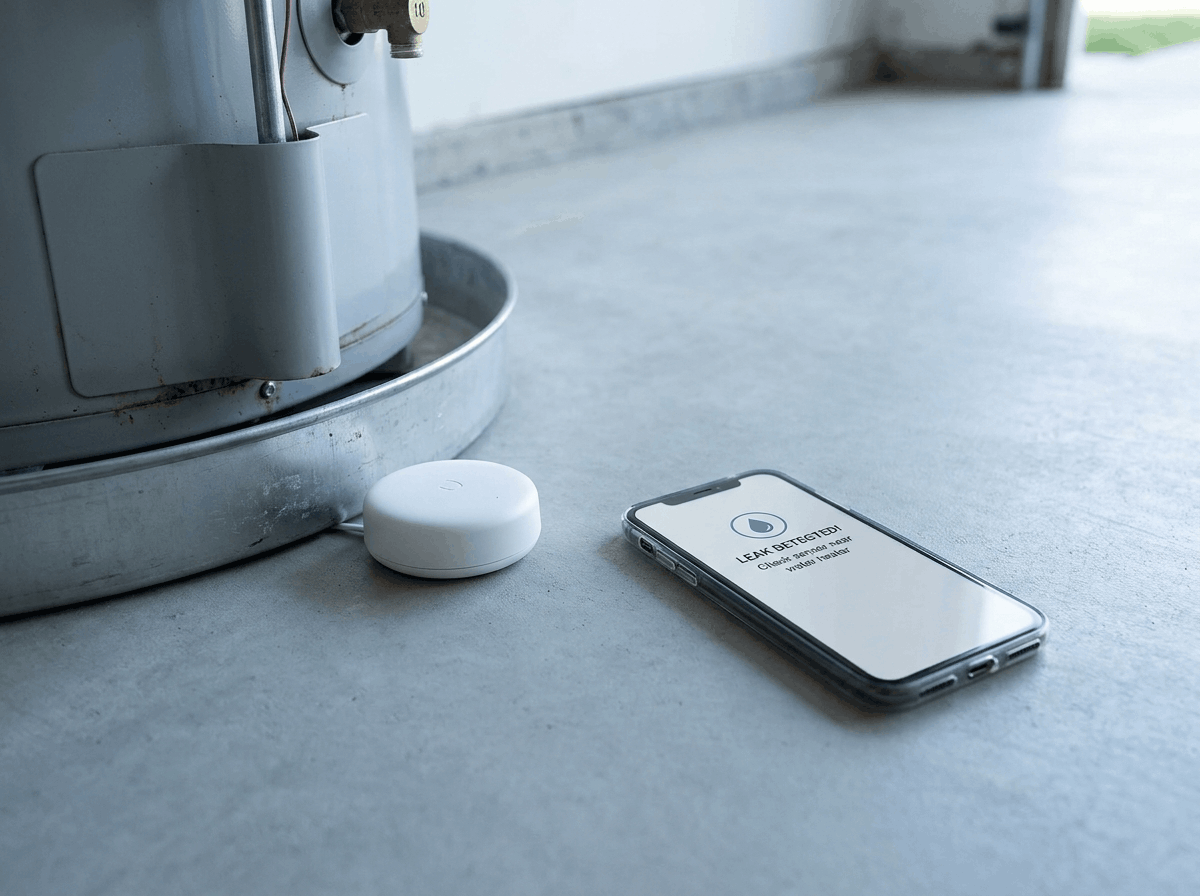
For homeowners who travel often or leave a home unoccupied for long stretches, these detectors are a worthwhile investment. Combined with the physical steps of shutting off the water and preparing your appliances, they give you both prevention and awareness, which is exactly the peace of mind you want when your house is sitting empty over the holidays. If you'd like help thinking through protection for your home before you travel, contact us.
📞 Came home to a water disaster, or want it handled fast if you do? Call Water Gone Restoration at (949) 406-0287 for 24/7 emergency water damage response across Orange County.
Yes, and it's the single most effective thing you can do. Shutting off the main water supply eliminates every possible plumbing leak at once, because no supply line, hose, or pipe can flood your home without water pressure feeding it. For a short trip, it's usually all you need. For longer absences, it's the foundation, with steps like isolating the ice maker, setting the water heater to vacation mode, and testing the sump pump adding extra protection.
It's typically located where the water supply enters your home, often near the front of the house, in the garage or a utility area, or at the street meter. Locate it before your trip on a calm afternoon rather than in a rush, confirm you can operate it, and make sure it isn't seized or blocked. Consider labeling it and showing another household member or house-sitter where it is, so the water can be shut off quickly if it's ever needed.
Vacation mode is a setting on many water heaters that maintains the tank at a low temperature without fully heating it, saving energy while you're away and reducing wear on the unit. On gas heaters, look for a vacation or "vac" setting on the control dial; newer or electric models may have a corresponding mode. If your heater lacks a dedicated setting, simply turning the temperature down for the duration of your absence accomplishes much the same thing.
Pour water into the sump pit until the float rises, then confirm the pump turns on, empties the pit, and shuts off on its own. Check that the discharge line is clear and sends water away from the house, and make sure the pump is plugged in. If it's sluggish, noisy, or doesn't start, fix it before you leave. In flood-prone areas, a battery backup keeps the pump running during a power outage.
For homes left unoccupied during the holidays, they add real value. Basic point sensors placed at high-risk spots (under sinks, near the water heater, behind the fridge) alert your phone the moment they detect moisture, turning a silent, days-long leak into an early warning. More advanced systems can automatically shut off the water when they detect a leak. Combined with physically shutting off the water before you leave, they provide both prevention and awareness.
We answer 24/7. Give us your number and a short description of the damage, and an IICRC-certified technician will call you back to schedule a moisture assessment. If it is an emergency, calling is still the fastest route.

