



By the Water Gone Restoration team · IICRC-certified restoration, Orange County
October 26, 2026
By the Water Gone Restoration team · IICRC-certified restoration, Orange County
October 26, 2026

Thanksgiving is the day your kitchen works the hardest, and it's no accident that it's also one of the biggest days of the year for residential plumbing emergencies. All the ingredients for a leak come together at once: constant cooking, extra dishes, a house full of guests, and appliances running for hours on end. When a supply line, a hose, or a connection is already worn, holiday-level demand is exactly what pushes it over the edge. That's why Thanksgiving kitchen leak prevention matters, because a kitchen leak in an Orange County home can quickly become a call for water damage restoration.
The frustrating thing about holiday kitchen leaks is how preventable most of them are. The failures aren't random; they cluster around the same handful of spots, year after year. A worn dishwasher hose, an aging supply line, a slow drip under the sink that finally gives way under heavy use, the refrigerator's ice-maker line running overtime. Each of these is easy to check, and catching even one weak point before the holiday can save you from a real disaster in the middle of dinner.
At Water Gone Restoration, we respond to these emergencies every holiday season, and the pattern is remarkably consistent. So here are the seven kitchen leak risks worth checking before Thanksgiving, why each one is dangerous, what to look for, and a simple pre-holiday routine to tie it all together. A little attention now is the cheapest insurance there is against a soaked kitchen when you have a houseful of people to feed.
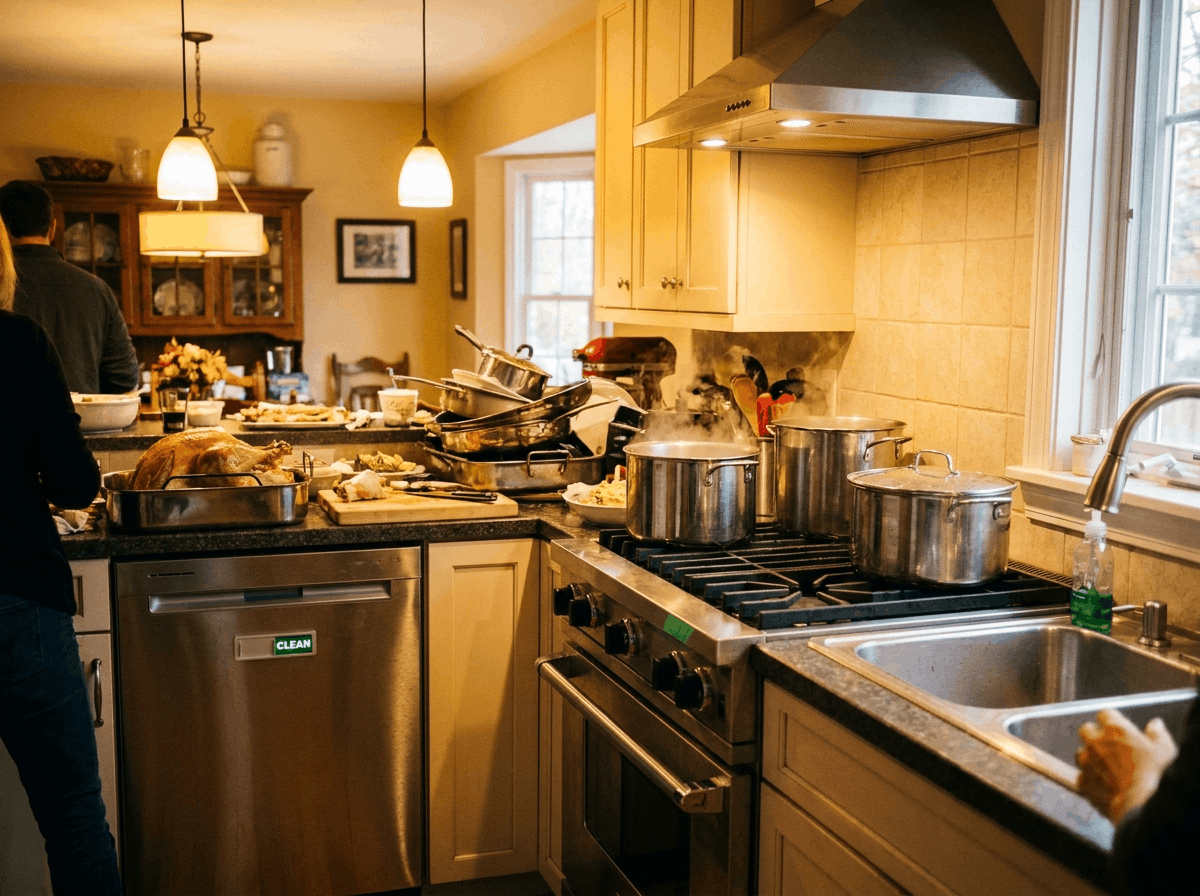
Before the specific risks, it helps to understand why this particular day is so hard on a kitchen. Plumbing components fail under stress, and Thanksgiving concentrates an unusual amount of stress into a short window. It's the combination that does the damage, not any single factor.
Think about what your kitchen endures. The dishwasher runs load after load instead of once a day. The garbage disposal processes far more than usual. The sink is in near-constant use. The refrigerator's ice maker cycles repeatedly to keep drinks cold for a crowd. Meanwhile the water is running, draining, and pressurizing your pipes for hours at a stretch. Any component that was already aging (a brittle hose, a corroded fitting, a supply line near the end of its life) is now being asked to perform at its hardest, and that's precisely when weak points give way.
This is why a proactive check beats a reactive scramble. You can't add capacity to your plumbing before the holiday, but you can find and fix the components most likely to fail under load. The seven risks below are where those failures happen, in rough order of how often we see them cause real damage.
The dishwasher is the single biggest kitchen leak risk on Thanksgiving, and it presents two distinct failure points. The first is the supply hose that feeds water to the unit. Like any flexible line, it degrades over time, becoming stiff and brittle, and the connections can loosen or corrode. Under the heavy cycling of a holiday, a weakened supply hose is a prime candidate to leak or burst, sending water pouring under and behind the appliance.
The second failure point is the drain connection, where the dishwasher ties into the sink drain or disposal. A loose, clogged, or improperly seated drain connection can cause backups and leaks during the constant use of the holiday. Because both of these problems occur behind or beneath the dishwasher, they're easy to miss until the surrounding cabinetry and flooring are already soaked.
Check both before the holiday. Inspect the supply hose for stiffness, cracking, or corrosion at the fittings, and confirm the connections are secure. Look for any dampness, staining, or mineral buildup around the base of the dishwasher, which signals a leak that's already begun. Running a normal cycle a day or two ahead and watching the floor afterward is a simple way to catch a slow leak before it meets holiday-level demand.
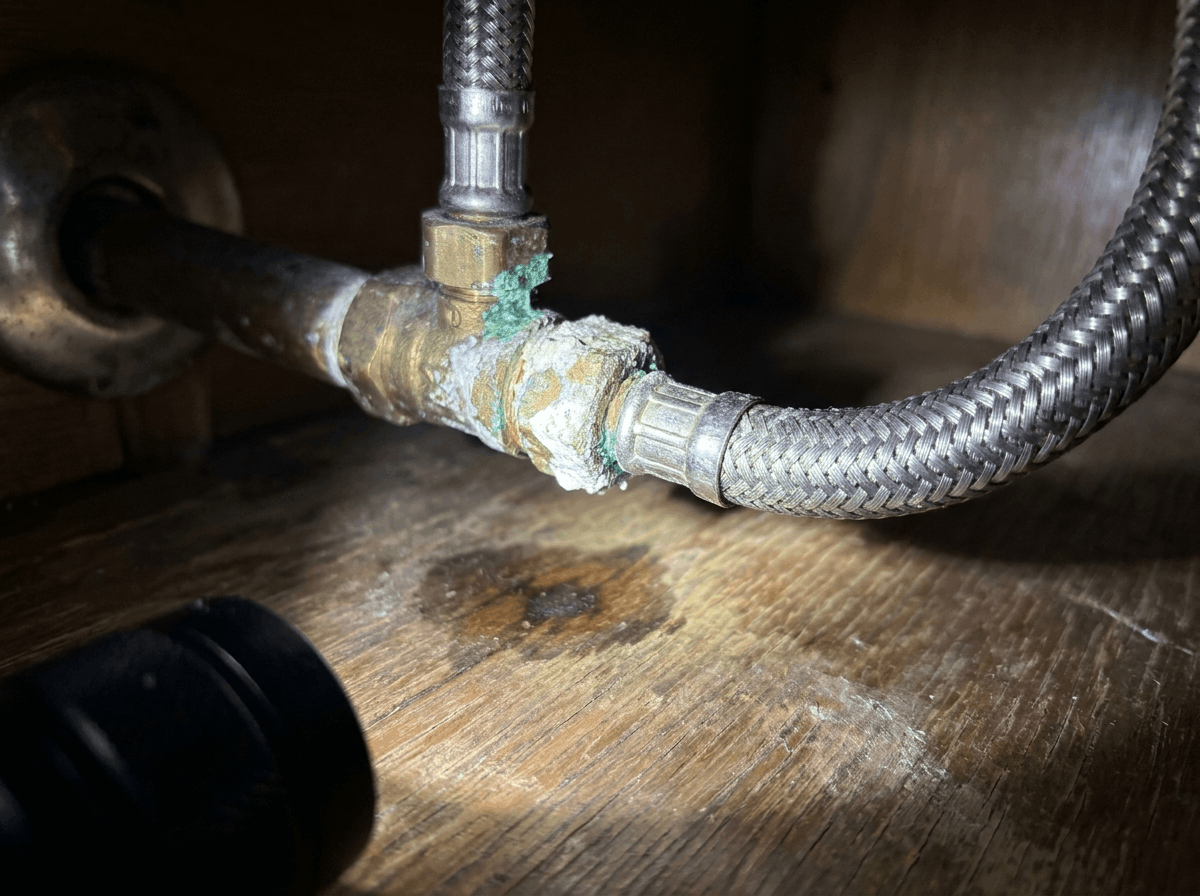
The cabinet under your kitchen sink hides more potential leak sources than anywhere else in the room: the faucet supply lines, the shutoff valves, the drain trap, and the various connections that tie them together. Many under-sink leaks start as slow drips that go unnoticed for weeks, quietly damaging the cabinet base, until a surge of holiday use turns a minor seep into a real leak.
Take a flashlight and inspect the whole cabinet. Look for water staining or a damp, swollen cabinet floor, corrosion or mineral crust on the fittings, and any active dripping at the supply lines, the valves, or the drain trap. A musty smell inside the cabinet is another tell, often a sign of moisture that's been present long enough to start causing problems. Any of these deserves attention before the holiday load arrives.
The reason hidden under-sink leaks matter beyond the immediate mess is what they can lead to. Moisture trapped in an enclosed cabinet, soaking into the base and the surrounding materials, is a classic setup for mold, which can take hold within a day or two of the right conditions. Catching and fixing a slow under-sink leak isn't just about avoiding a Thanksgiving flood; it's about preventing the longer-term damage that hidden moisture causes.
If your refrigerator makes ice or dispenses water, a small supply line runs to it behind the unit, and it's one of the most overlooked leak risks in the kitchen precisely because it's out of sight. A crack or loose fitting here can leak steadily behind the fridge, damaging the flooring and the wall, sometimes for a long time before anyone notices.
Holiday demand makes this line especially vulnerable. With guests going through ice and water constantly, the ice maker cycles far more than it normally would, stressing a line that may already be brittle with age. Older plastic ice-maker lines are the most prone to failure, cracking at the connections under the added use.
Before the holiday, pull the refrigerator out far enough to see the line and its connection, and check the wall and floor behind it for any dampness, staining, or mineral deposits. If you find signs of a leak, or if your line is an older plastic type, replacing it with a braided steel line is a cheap, quick upgrade that eliminates one of the sneakiest sources of holiday water damage.
The final three risks round out the kitchen. Each is worth a quick check as part of your pre-holiday routine.
None of these three is exotic, and all of them are easy to overlook. Together with the dishwasher, the under-sink cabinet, and the refrigerator line, they cover the great majority of the kitchen failures that turn a holiday into an emergency. A few minutes on each is a small price for a worry-free Thanksgiving.
You don't need to check all seven risks separately over a weekend. Bundled together, they make a single 15-minute walk-through you can do a day or two before Thanksgiving. Move through the kitchen methodically and you'll cover every major leak point in one pass.
That last step is worth emphasizing, because even the best inspection can't guarantee nothing goes wrong. If a leak does get away from you during the holiday, the ability to shut off the water in seconds is what keeps a scare from becoming a catastrophe. Cut the water, then call for professional help immediately. The faster the response, the more contained the damage and the cleaner any resulting insurance claim will be. If you have questions before the holiday, you can also contact us any time.
📞 Kitchen leak or plumbing emergency this Thanksgiving? Call Water Gone Restoration at (949) 406-0287 for fast 24/7 water damage response across Orange County, every day of the year.
Because it concentrates an unusual amount of stress on the kitchen at once. The dishwasher runs load after load, the disposal and sink are in near-constant use, and the refrigerator's ice maker cycles repeatedly for a crowd, all while water runs and pressurizes the pipes for hours. Components that were already aging (brittle hoses, corroded fittings, worn supply lines) tend to fail under this sustained demand, which is why a pre-holiday check pays off.
The dishwasher is the biggest culprit, with two failure points: the supply hose that feeds it and the drain connection where it ties into the sink or disposal. Both can leak under the heavy cycling of the holiday, and because they're behind or beneath the unit, they're easy to miss until the cabinetry and flooring are soaked. Checking the hose for wear, confirming secure connections, and running a test cycle beforehand catches most dishwasher leaks early.
Many under-sink leaks start as slow drips that go unnoticed for weeks, damaging the cabinet base, until a surge of holiday use turns the seep into a real leak. Beyond the immediate mess, moisture trapped in the enclosed cabinet is a classic setup for mold, which can take hold within a day or two of the right conditions. That's why finding and fixing a slow under-sink leak before the holiday matters for both the short and long term.
If your ice-maker line is an older plastic type, replacing it with a braided steel line is a cheap, quick upgrade worth doing before the holiday. Plastic lines become brittle with age and tend to crack at the connections, and because the line sits hidden behind the fridge, a leak can run for a long time before anyone notices. Heavy holiday ice use adds extra strain at exactly the wrong time.
Shut off the water immediately, ideally at the fixture's shutoff valve, or at the home's main shutoff if the leak is significant, which is why locating that valve ahead of time is so important. Then move valuables and electronics away from the water and call for professional water damage help right away. The faster the water is stopped and the response begins, the more contained the damage stays and the stronger any resulting insurance claim will be.
We answer 24/7. Give us your number and a short description of the damage, and an IICRC-certified technician will call you back to schedule a moisture assessment. If it is an emergency, calling is still the fastest route.

