



By the Water Gone Restoration team · IICRC-certified restoration, Orange County
October 19, 2026
By the Water Gone Restoration team · IICRC-certified restoration, Orange County
October 19, 2026

Thanksgiving puts more strain on your home's plumbing than almost any other day of the year. A full house of guests, a kitchen running non-stop, extra loads of dishes, and bathrooms in constant use all add up to a system working far harder than usual. It's no coincidence that Thanksgiving is one of the busiest days of the year for plumbing emergencies, and here in Orange County, skipping a pre-Thanksgiving plumbing inspection can turn a celebration into a call for water damage restoration in a matter of minutes.
The reassuring part is that most holiday plumbing disasters are preventable, and preventing them doesn't take a professional or a whole weekend. A focused 45-minute walk-through of your home in the days before Thanksgiving catches the great majority of the issues that cause problems under holiday load. You're not trying to rebuild your plumbing; you're looking for the small, obvious warning signs that a component is aging, loose, or ready to fail when you ask the most of it.
At Water Gone Restoration, we see the same handful of failures every holiday season, and nearly all of them would have been caught by a quick inspection. This guide walks through that 45-minute routine step by step: the under-sink supply lines, the garbage disposal, the dishwasher, the refrigerator water line, the guest-bathroom toilets, and the one thing everyone should locate before the guests arrive: the main water shutoff. Set aside less than an hour, and you'll head into the holiday with real peace of mind.
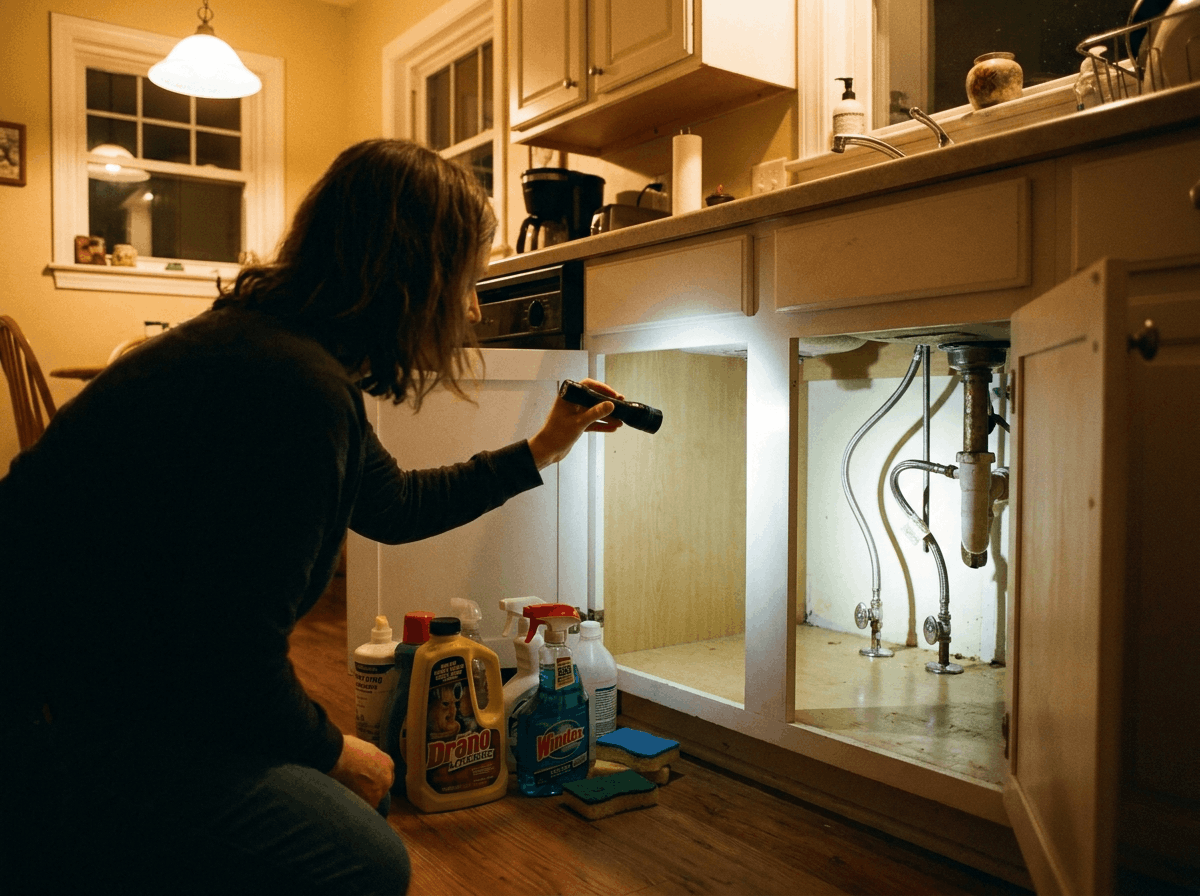
The best place to begin is where the most common failures start: the supply lines under your sinks. These are the flexible hoses that carry water to your faucets, and they don't last forever. The braided stainless-steel lines are more durable, but older rubber or plastic ones degrade over time, and a line that's been quietly aging for a decade can choose the worst possible moment to give way.
Grab a flashlight and look under each sink in the house, the kitchen especially, but the bathrooms too. You're checking for a few specific things: any dampness or water staining on the cabinet floor, corrosion or mineral buildup on the fittings, bulging or cracking in the hoses themselves, and any sign of a slow drip at the connections. A supply line that looks corroded, brittle, or damp at the fitting is a line living on borrowed time, and it's far cheaper to replace it now than to clean up after it fails.
While you're down there, gently confirm that the shutoff valves for each fixture actually turn. These small valves let you cut water to a single sink or toilet without shutting off the whole house, and they can seize up from years of disuse. Knowing they work, before an emergency, means you can stop a localized leak instantly instead of scrambling. If a valve is frozen or a supply line looks questionable, that's the kind of small fix worth handling before the holiday rather than during it.
You don't need to be a plumber to spot a supply line in trouble. Green or white crust on the metal fittings signals corrosion. A hose that feels stiff, cracked, or swollen has lost its integrity. Rust-colored stains or a persistent damp spot on the cabinet base point to a slow leak that's already begun. Any one of these is a reason to replace the line, an inexpensive part, before it turns into a burst hose spraying water into your kitchen mid-holiday.
The garbage disposal takes a beating on Thanksgiving, and it's the source of a surprising number of holiday plumbing calls. The problem usually isn't a broken disposal; it's what gets put down it. Holiday cooking generates exactly the kinds of waste disposals handle worst, and a clog or jam at the wrong moment can back up a sink full of dishwater right when you need the kitchen most.
Before the holiday, run the disposal to confirm it's working smoothly, with no grinding, humming, or slow drainage that suggests a partial clog. Then, just as importantly, make a plan for what won't go down it during the cooking marathon. A little discipline here prevents the classic Thanksgiving backup.
None of this requires special tools, just a heads-up to whoever's on kitchen duty. Overloading the disposal or feeding it the wrong scraps is one of the most avoidable causes of a holiday plumbing headache, and a two-minute test plus a simple keep-out list handles it.
Your dishwasher is about to run more cycles in a few days than it might in a normal couple of weeks, so it's worth a quick look before the load ramps up. Dishwasher failures tend to show up as leaks, either from the supply hose that feeds it or from connections that have loosened over time, and a leak under or behind the dishwasher can go unnoticed until it has soaked the surrounding cabinetry and flooring.
Pull the dishwasher's kick plate if you can access it easily, or simply inspect around and behind the unit. Look for water staining, dampness, or corrosion at the hose connections and the inlet valve. Check that the supply hose isn't kinked, cracked, or brittle, and that the connections feel secure rather than loose. If you notice any dampness or mineral buildup around the fittings, that's an early sign of a leak worth addressing before you put the appliance through holiday-level use.
It also pays to run a normal cycle a day or two ahead and watch it, listening for the fill and drain and checking the floor around the unit afterward for any moisture. Catching a slow dishwasher leak early is important not just for the immediate mess but because trapped moisture under cabinets is exactly the kind of hidden dampness that can lead to mold if it's left to sit unnoticed.
If your refrigerator has an ice maker or water dispenser, it's connected to a small water line running behind the unit, and this line is one of the most overlooked failure points in the entire kitchen. Because it's hidden behind the fridge, a slow leak here can run for a long time before anyone notices, quietly damaging the flooring and the wall behind the appliance, and sometimes the room below in a two-story home.
These lines, particularly the older plastic ones, become brittle with age and are prone to cracking at the connections. Before the holiday, carefully pull the refrigerator out far enough to see the line and its fittings, and check for any dampness, mineral deposits, or staining on the wall and floor behind it. A damp spot or white crust at the connection is a warning sign. If your line is an older plastic type, upgrading to a braided steel line is an inexpensive improvement that dramatically reduces the risk of a hidden leak.
The reason this matters so much around the holidays is volume. With a houseful of guests going through ice and water, the ice maker cycles far more than usual, putting more demand on that little line at exactly the time it's most likely to fail. A two-minute check behind the fridge, and a cheap line upgrade if it's overdue, closes off one of the sneakiest sources of holiday water damage.
Your guest bathrooms are about to see far more traffic than they normally do, and toilets that work fine with light use can reveal their weaknesses under a crowd. A running, leaking, or weak-flushing toilet is a common holiday annoyance, and occasionally a real problem, so a quick test of each toilet before the guests arrive is well worth the few minutes.
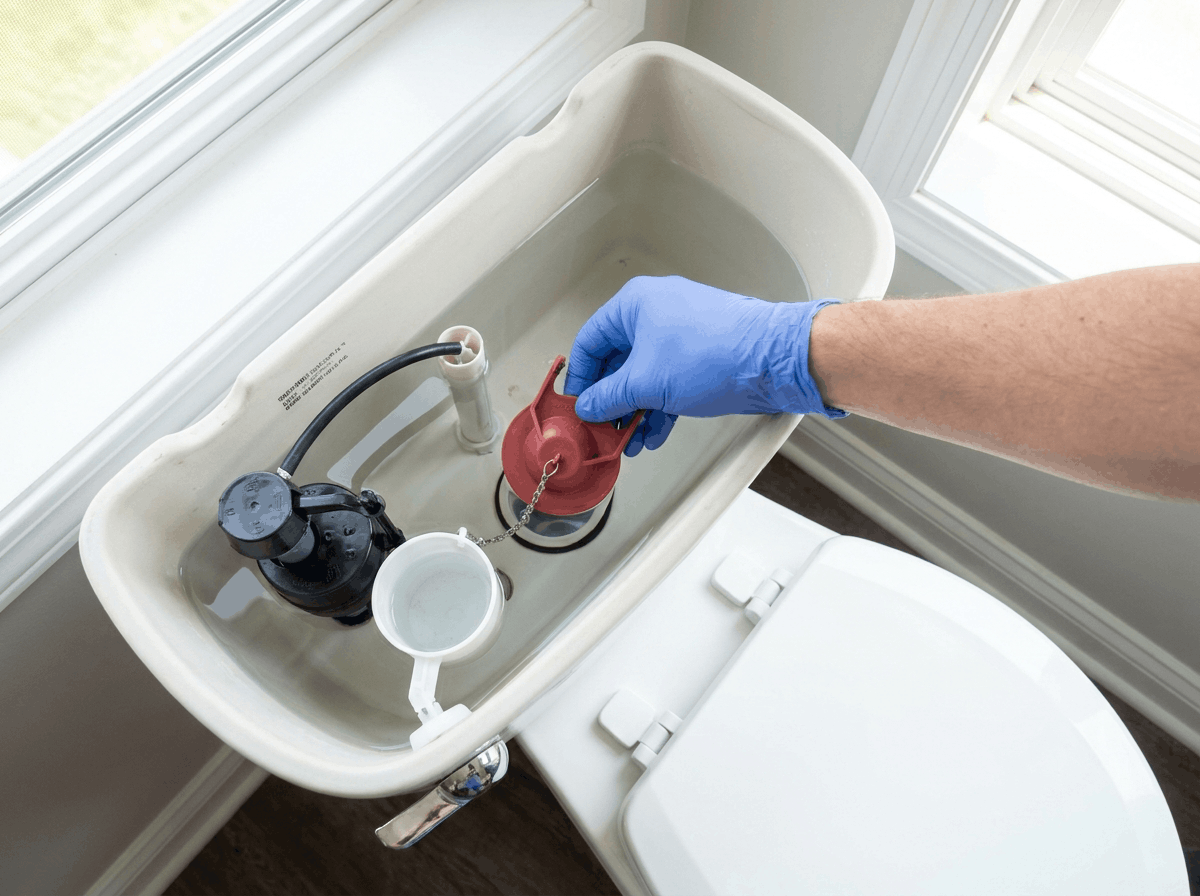
Start with the flapper, the rubber seal at the bottom of the tank that controls each flush. A worn flapper is the usual cause of a toilet that runs constantly or randomly refills, wasting water and signaling a seal that's failing. Test it simply: after the tank refills, listen for a continuous hiss or watch whether water keeps trickling into the bowl. If it does, the flapper likely needs replacing, an easy, inexpensive fix. Also check the supply line and shutoff valve behind each toilet for the same dampness and corrosion you looked for under the sinks.
Finally, confirm each toilet flushes strongly and refills properly, and make sure everyone knows where a plunger is kept. Guest-bathroom clogs are a Thanksgiving classic, and having the basics in place (working toilets, functioning shutoff valves, and an accessible plunger) means a minor issue stays minor instead of becoming an emergency in the middle of dinner.
This last step is the most important one on the list, and it takes about five minutes. If a real plumbing emergency happens, such as a burst supply line, a failed hose, or a pipe that lets go, the single most valuable thing you can do is shut off the water fast. And you can only do that quickly if you already know where the main shutoff is and that it works.
Most homeowners have never located their main water shutoff, which means they'd be searching for it while water pours into their home. Don't be in that position on Thanksgiving. The main shutoff is usually where the water supply enters the house, often near the front of the home, in a garage or utility area, or at the street meter. Find it now, confirm you can operate it, and make sure it isn't blocked by stored items or seized from age.
Show at least one other person in the household where it is, too, so someone can act even if you're not the one who spots the problem. Knowing how to cut the water in seconds is the difference between a quick save and a flooded home. If the worst does happen and water gets away from you, shutting off the main and calling for professional help immediately keeps the damage, and any resulting insurance claim, as contained as possible. For questions before the holiday, you can contact us any time.
📞 Hit a plumbing emergency this holiday season? Call Water Gone Restoration at (949) 406-0287 for 24/7 water damage response across Orange County, holidays included.
A full house dramatically increases the load on your plumbing all at once. The kitchen runs non-stop, the dishwasher and garbage disposal work overtime, the refrigerator's ice maker cycles constantly, and bathrooms see heavy use. Components that handle normal daily use without trouble can fail under this sustained strain, which is why Thanksgiving is one of the busiest days of the year for plumbing emergencies. A quick inspection beforehand catches the weak points before they're tested.
Look under each sink with a flashlight and check the flexible hoses that feed the faucets. Warning signs include green or white corrosion on the metal fittings, hoses that feel stiff, cracked, or swollen, and any dampness or rust-colored staining on the cabinet floor. Braided stainless-steel lines last longer than older rubber or plastic ones. Any line showing these signs should be replaced, an inexpensive part, before it fails under holiday load.
Keep out fats, oils, and grease, which solidify and clog your pipes; fibrous and starchy foods like potato peels, celery, and onion skins, which wrap the blades or turn to paste; and bones, pits, and shells, which can jam or damage the unit. Run cold water while the disposal works so any fats stay solid and flush through. Collecting grease in a container and scraping fibrous scraps into the trash prevents the classic holiday sink backup.
After the tank refills, listen for a continuous hiss or watch for water trickling into the bowl. A toilet that runs constantly or refills on its own usually has a worn flapper, the rubber seal at the bottom of the tank. Replacing it is an easy, inexpensive fix worth doing before guests arrive, since guest bathrooms see far more use over Thanksgiving than on a normal day.
It's usually located where the water supply enters your home, often near the front of the house, in a garage or utility area, or at the street meter. Locate it before the holiday, confirm you can operate it, make sure it isn't blocked or seized, and show another household member where it is. In a plumbing emergency, shutting off the main quickly is the single most effective way to limit water damage, so knowing where it is ahead of time is essential.
We answer 24/7. Give us your number and a short description of the damage, and an IICRC-certified technician will call you back to schedule a moisture assessment. If it is an emergency, calling is still the fastest route.

