.svg)
.svg)
.svg)
.svg)
.svg)
By the Water Gone Restoration team · IICRC-certified restoration, Orange County
September 11, 2026
By the Water Gone Restoration team · IICRC-certified restoration, Orange County
September 11, 2026
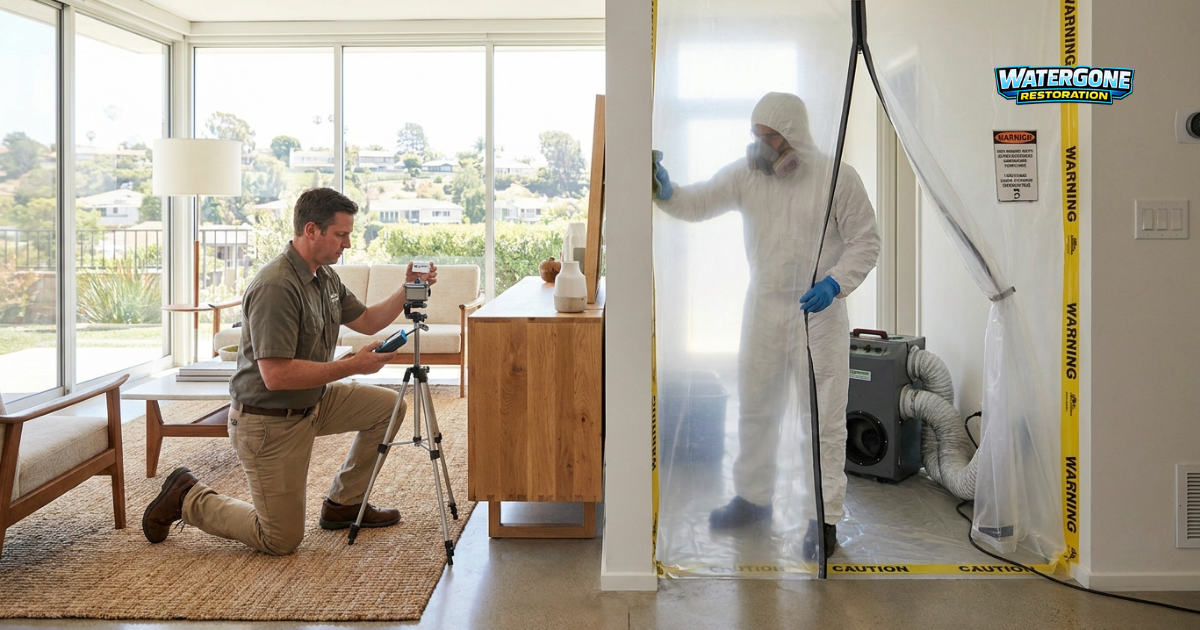
If you have spotted mold in your home, or you just cannot shake a musty smell, you have probably run into two words that get used almost interchangeably: testing and remediation. They are not the same thing, and confusing them can cost you time and money. Understanding the difference between mold testing vs. mold remediation in Orange County is the first step to making a smart decision, because one tells you whether you have a problem and how big it is, while the other actually removes it. Knowing which you need, and in what order, saves you from paying for a service that does not move you closer to a dry, healthy home.
One of the most common things we hear from Orange County homeowners is that they are not sure whether they should be scheduling a test or a cleanup. This guide clears that up. We will walk through when you genuinely need testing first versus when remediation is the obvious next step, the four main types of mold tests and what each one actually tells you, why hiring the same company to test and to remediate is a conflict of interest, the clearance test most people skip, and why DIY mold kits usually create more confusion than clarity.
Mold testing is diagnosis. It uses air samples, surface samples, and moisture readings to answer questions like: is mold present, what type is it, how concentrated is it, and where is it hiding? A test produces information — a report you can act on. It does not remove a single spore. Mold remediation, by contrast, is the treatment. It is the hands-on process of containing the affected area, removing contaminated materials, cleaning and treating surfaces, drying the structure, and fixing the moisture source so the mold does not come back. Testing measures the problem; remediation solves it.
The reason this distinction matters so much for Orange County homeowners is that the two are often bundled or blurred together by companies, and that is where people overspend. In many situations you do not need a formal test at all before starting cleanup, and in others testing is genuinely valuable. Knowing which situation you are in is the whole game, so let us look at when each one makes sense.
Testing earns its cost in specific scenarios. If any of the following describe your situation, a professional test before remediation is a reasonable investment:
The common thread is uncertainty. Testing is worth it when you genuinely do not know whether mold is present, where it is, or how bad it is. When those questions are already answered, paying for a test can be an unnecessary step.
In plenty of cases, testing first just delays the inevitable. If you can clearly see a patch of mold spreading across a bathroom ceiling or behind a kitchen sink, you do not need a lab report to tell you it is there — you need it gone. The Environmental Protection Agency itself notes that when mold is visible, testing is generally unnecessary before cleanup, because the response is the same regardless of the species: remove it and fix the moisture. Spending money to confirm what your eyes already see only postpones the mold remediation that actually protects your home.
This is especially true after a known water event. If a pipe burst, an appliance overflowed, or storm water got in, and mold has appeared in the days since, the cause and the solution are both clear. In those situations the priority is fast professional cleanup, not diagnostic testing, because every day the mold sits it spreads further and costs more to remove. The exception, as we will cover next, is the clearance test performed after the work is done.
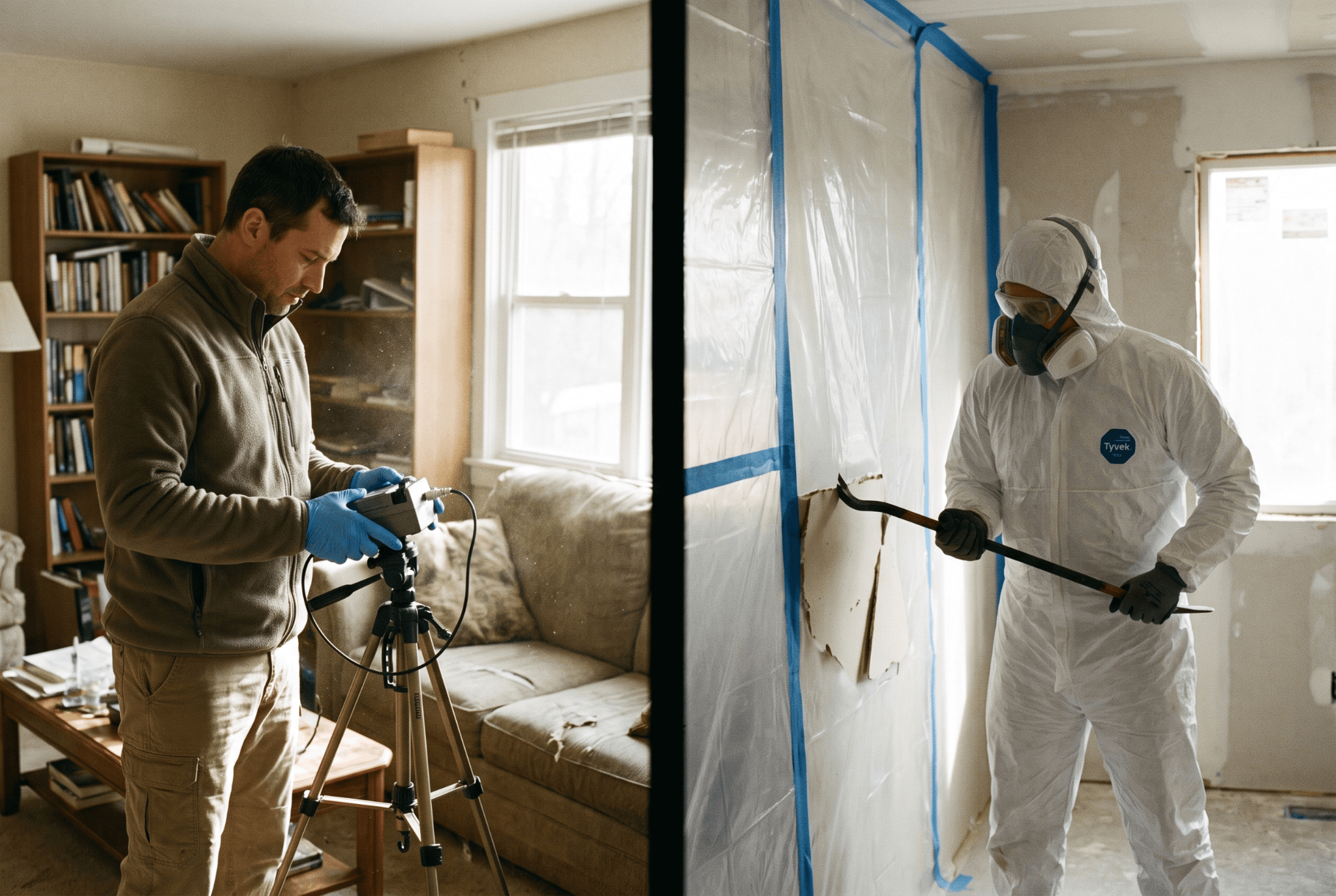
Not all mold tests are the same, and understanding what each measures helps you know what you are paying for and what the results actually mean:
Here is a trap many Orange County homeowners fall into. A company offers a free or cheap mold inspection, then the same company tells you how much mold there is and quotes you to remove it. See the problem? The party diagnosing the severity of your mold is the same party that profits from the cleanup. That is a direct conflict of interest, and it creates an incentive to find more mold, recommend more work, and inflate the scope.
The cleaner approach, especially for larger or health-related concerns, is to separate the two roles. Independent testing by a third party that does not do remediation gives you an objective assessment, and a reputable remediation company then works from that neutral report. It is worth noting that a "free inspection" from a remediation company is usually a visual assessment and a sales visit, not a lab-based test — which is perfectly fine for a clearly visible problem, but not a substitute for independent testing when you need an unbiased measurement. A trustworthy remediation company will be upfront about this distinction rather than blurring it.
Imagine paying for mold removal and never confirming it actually worked. That is exactly what happens when clearance testing is skipped, and it happens constantly. Clearance testing is an independent check, performed after remediation is complete, that verifies the affected area has returned to normal spore levels and that the moisture source has been resolved. Without it, you are taking the removal on faith.
Clearance testing matters for two reasons. First, it protects your health and your investment by confirming the mold is genuinely gone rather than merely painted over or partially removed. Second, it gives you documented proof — valuable for your own records, for any future home sale, and for an insurance claim if one is involved. When mold stems from a covered water event, the same documentation discipline that supports the water damage claim carries through to verifying the cleanup. A remediation company confident in its work will welcome an independent clearance test, because it is the objective stamp that the job met standard.
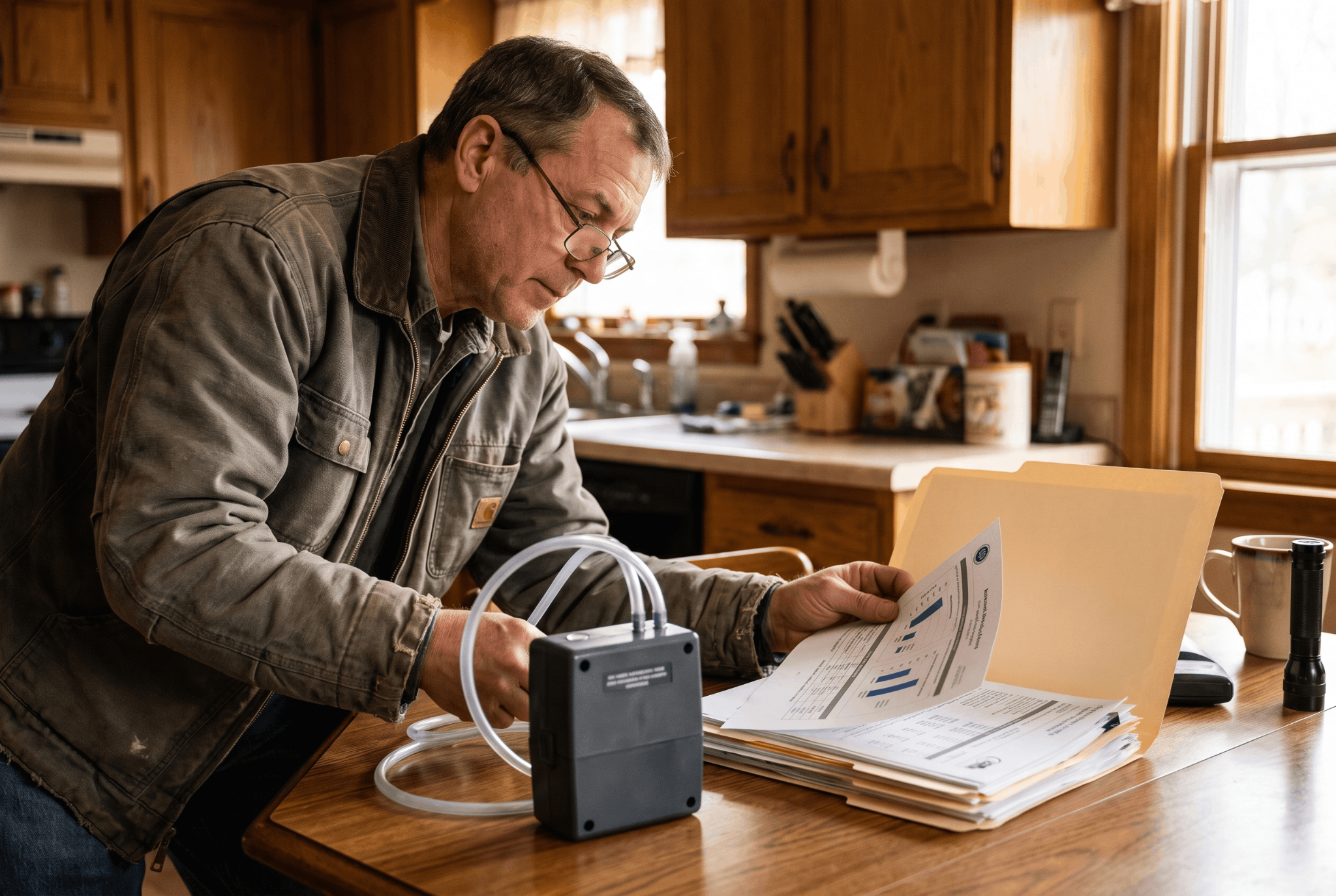
The mold test kits sold at hardware stores are inexpensive and tempting, but they tend to create more confusion than clarity. Most work by leaving a petri dish open to the air until something grows. The problem is that mold spores are everywhere, indoors and out, so a dish left open will almost always grow something — which tells you nothing about whether your home has an actual mold problem. There is no outdoor baseline to compare against, no measurement of spore concentration, and no professional interpretation.
These kits also cannot find hidden mold inside walls or ductwork, they frequently produce false positives that alarm homeowners unnecessarily, and they can just as easily produce false reassurance when a specific spot happens to test clean while a real problem lurks nearby. For a decision that affects your family's health and the scope of a full remediation, a DIY dish is not the tool. If you need real answers, independent professional testing is worth the cost; if you can already see the mold, skip testing altogether and go straight to professional cleanup.
Not always. When mold is clearly visible, testing is generally unnecessary before cleanup, because the response is the same regardless of the species — remove it and fix the moisture. Testing is genuinely useful in different circumstances: when you smell mold but cannot see it, when there is a health or dispute question, or during a real estate transaction. The one test worth prioritizing is the clearance test after remediation, which confirms the work succeeded. If you can see the problem, focus on removing it rather than paying to diagnose it.
Professional mold remediation follows a clear process. Technicians first inspect and locate the moisture source feeding the mold, then contain the affected area with barriers and negative air pressure to prevent spores from spreading. They remove contaminated porous materials, clean and treat remaining surfaces with appropriate antimicrobials, and run commercial drying equipment until the structure is verified dry. Finally, they address the underlying water problem so mold does not return, and ideally verify the result with independent clearance testing. The goal is a permanent fix, not a surface wipe-down.
People exposed to indoor mold sometimes report a cluster of symptoms that are often mistaken for allergies, commonly including persistent coughing, sneezing, nasal congestion, red or itchy eyes, skin irritation, headaches, unusual fatigue, worsening asthma or wheezing, difficulty concentrating, and a recurring sore throat. This is not a medical diagnosis and symptoms vary widely, so anyone concerned should consult a doctor. The EPA publishes general guidance on mold and health. A telling pattern is when symptoms ease after leaving the house and return on coming home, which points toward an indoor moisture issue worth investigating.
It depends on the size and location of the problem. A small, contained area might be remediated in a day or two, while a larger contamination that has spread through multiple rooms or into the HVAC system can take a week or more, since the structure must be dried and verified before the job is truly done. Coastal Orange County humidity can extend drying time, because partial drying invites regrowth. The most important factor is speed of response: the sooner remediation begins after mold appears, the smaller and faster the job tends to be.
Many people who experience symptoms they associate with indoor mold do feel substantially better once they are no longer exposed and the mold in their environment has been properly removed. Recovery varies widely from person to person and depends on individual health, the length of exposure, and other factors, so this is very much a medical question rather than a restoration one. The essential step from the home side is eliminating the source — removing the mold and fixing the moisture so exposure stops. For any health concerns or symptoms, you should always consult a qualified medical professional for guidance and treatment.
We answer 24/7. Give us your number and a short description of the damage, and an IICRC-certified technician will call you back to schedule a moisture assessment. If it is an emergency, calling is still the fastest route.
.png)
