.svg)
.svg)
.svg)
.svg)
.svg)
By the Water Gone Restoration team · IICRC-certified restoration, Orange County
September 11, 2026
By the Water Gone Restoration team · IICRC-certified restoration, Orange County
September 11, 2026

If you have noticed a musty smell, a suspicious stain, or simply worry about what coastal humidity has done behind your walls, your first question is probably a practical one: what does this cost? Understanding mold inspection cost in Newport Beach is the starting point for making a smart, confident decision rather than an anxious one. The good news is that inspection is far less expensive than remediation, and knowing what you are paying for, and what you should receive in return, puts you in control of the process from the very beginning.
Newport Beach homes face a unique moisture environment thanks to marine layer humidity and other year-round coastal conditions — the same pattern we cover in our guide to summer humidity and mold prevention in Orange County — which makes mold a genuine and recurring concern. This guide walks through what each level of inspection covers, the difference between free and paid inspections, why who does your testing matters, and when your homeowners insurance claim might cover it. By the end, you will know exactly what a fair, thorough inspection looks like.
The first thing to understand about mold inspection cost in Newport Beach is that "free" is rarely free in the way you might hope. A free inspection is usually offered by a company that also sells remediation services. Their technician comes out at no charge, but the visit functions as a sales call, and the person assessing whether you have a problem is the same person who profits from fixing it.
That does not automatically make a free inspection worthless, and reputable companies do offer honest no-cost assessments. But it does create a built-in incentive to find problems and recommend extensive work. A paid inspection, by contrast, is a service you purchase for the information itself. The inspector's only product is an accurate assessment, which is what you are paying for. For high-stakes decisions, especially when buying a home or planning a major repair, that independence is often worth the fee.

Pricing depends on the size of your home, how many samples are taken, and the type of testing involved. Rather than one flat fee, most Newport Beach mold inspections fall into a few general tiers based on scope:
Home square footage, the number of samples collected, and whether an attic, crawl space, or HVAC system needs to be accessed all move you within these tiers. Larger homes and properties needing multiple samples naturally involve more work than a single-room assessment. This tier is also where coastal homes benefit most, since air sampling can catch hidden mold that visual inspection alone would miss, including growth that starts in a poorly ventilated attic, a pattern we cover in our attic moisture damage guide for Orange County homes.
Whatever a provider quotes for your home, always confirm current pricing directly before the visit, since rates vary by company and change over time. Weighed against the cost of remediation, which is typically far higher once mold has spread through building materials, a thorough inspection remains a modest, sensible investment relative to the risk of skipping it.
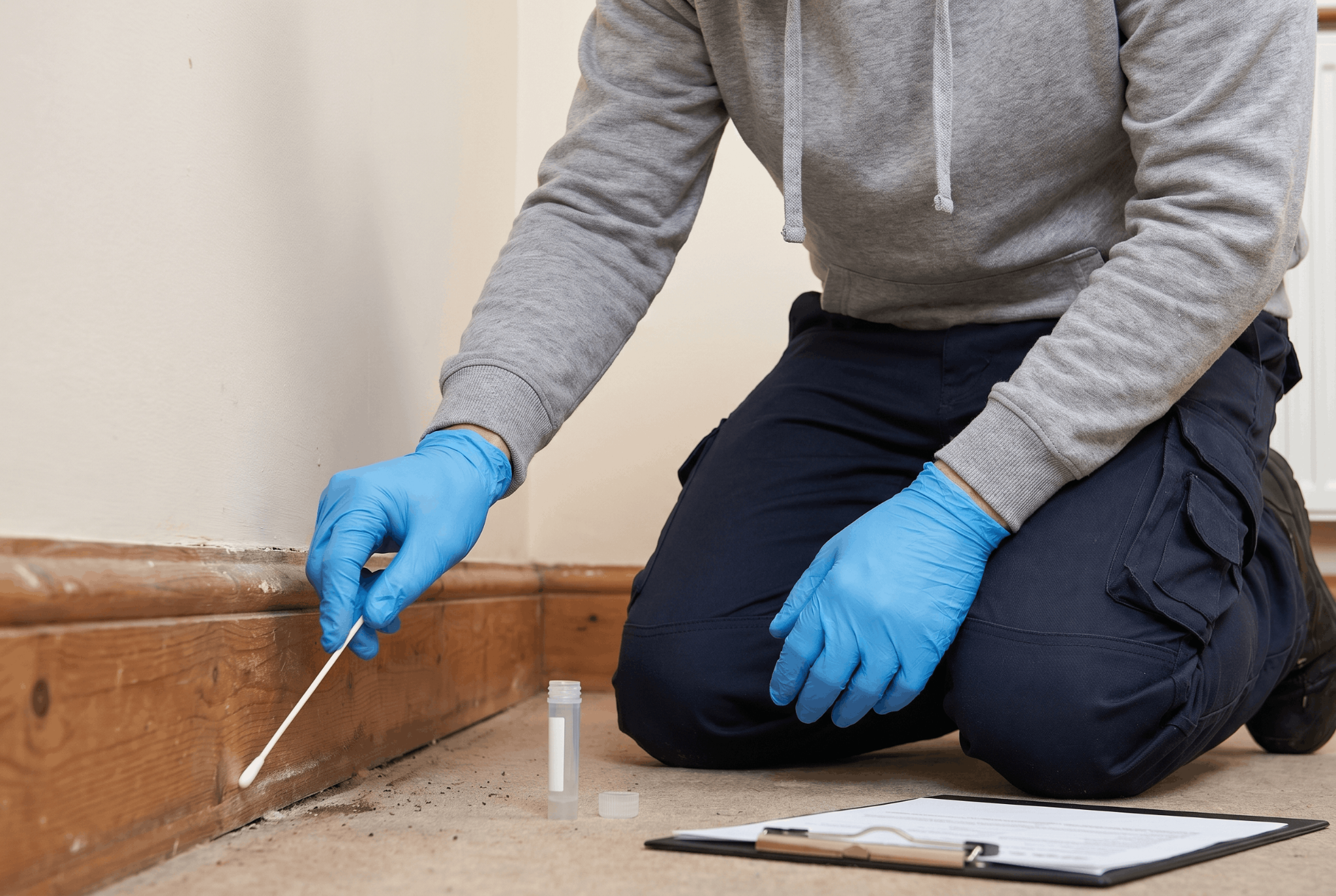
Whether the company that tests for mold should also be the company paid to remove it is worth understanding before you book anything, and that argument is set out in full in mold testing vs. mold remediation.
Whatever you pay, the deliverable is the report, and not all reports are created equal. A one-page note saying "mold found, call us" is not an inspection report. A genuine, professional report should contain the following:
If a report lacks these elements, you have not received the full value of your inspection fee. Documentation like this also becomes essential if you later file an insurance claim or restore the affected materials through professional water damage restoration services.
Homeowners are often surprised by how their policy treats mold, and the answer hinges on the cause. Insurance generally covers mold testing and remediation when the mold results from a sudden, accidental, covered event, such as a burst pipe or a failed appliance. In those cases, testing tied to the claim may be reimbursed as part of the overall loss.
On the other hand, mold caused by long-term humidity, deferred maintenance, or gradual leaks is frequently excluded. This is exactly where Newport Beach's coastal climate complicates things, since slow, humidity-driven growth can be harder to attribute to a single event. Thorough documentation makes all the difference, which is why a detailed inspection report and clear records of the source can determine whether your homeowners insurance claim succeeds. If mold remediation does turn out to be necessary, that same documentation is what your restoration team will use to support the claim. If you are unsure where you stand, our insurance claims support can help you present a covered loss correctly and avoid leaving money on the table.
For most homeowners, mold testing is well worth it, especially in a humid coastal area like Newport Beach. Testing confirms whether a suspected problem is real, identifies hidden growth you cannot see, and tells you the type and concentration of spores present. That information guides smart decisions and prevents both overreaction and neglect. Relative to the cost of unnecessary remediation or, worse, untreated contamination, the modest price of a proper inspection usually pays for itself.
You can buy DIY mold test kits, and they may confirm that mold is present, but they have real limits. Home kits often produce false positives, since mold spores exist in all indoor air, and they rarely reveal hidden growth or pinpoint the moisture source driving it. They also lack the professional interpretation that turns raw results into action. DIY testing can be a rough first check, but for decisions that matter, a professional inspection gives far more reliable and useful information.
Among the most serious red flags is evidence of water intrusion and the mold that follows it, because moisture damage can hide expensive structural and air-quality problems behind walls and ceilings. Signs like staining, musty odors, warped materials, or past leaks warrant close attention. In coastal homes, hidden moisture is especially common. Catching these indicators early, ideally with a dedicated mold and moisture inspection, helps you avoid inheriting a costly problem after a purchase.
We answer 24/7. Give us your number and a short description of the damage, and an IICRC-certified technician will call you back to schedule a moisture assessment. If it is an emergency, calling is still the fastest route.
.png)
