.svg)
.svg)
.svg)
.svg)
.svg)
By the Water Gone Restoration team · IICRC-certified restoration, Orange County
September 11, 2026
By the Water Gone Restoration team · IICRC-certified restoration, Orange County
September 11, 2026

For years, Orange County homeowners have treated late summer as the safe, dry stretch of the calendar, but the weather is changing that assumption. Sudden, violent microburst storms are appearing more often in Southern California, and they tend to strike with little warning right around the Labor Day weekend, when many families are away. Smart storm damage preparation in Orange County now means planning for the water damage restoration a microburst can require, a kind of storm the region did not used to worry about.
A microburst is a brief, intense downdraft of wind and rain that can do surprising damage in just a few minutes: lifting roof material, overwhelming gutters, and driving water into places it was never meant to reach. Because these events are short and localized, homeowners often underestimate them until the water damage shows up inside. At Water Gone Restoration, we respond to the aftermath of these late-summer storms across OC, and the pattern is clear: a little preparation before a holiday weekend prevents the most expensive surprises. This guide covers what microbursts do, five outdoor checks to run before you leave, and why documenting your property first matters so much.
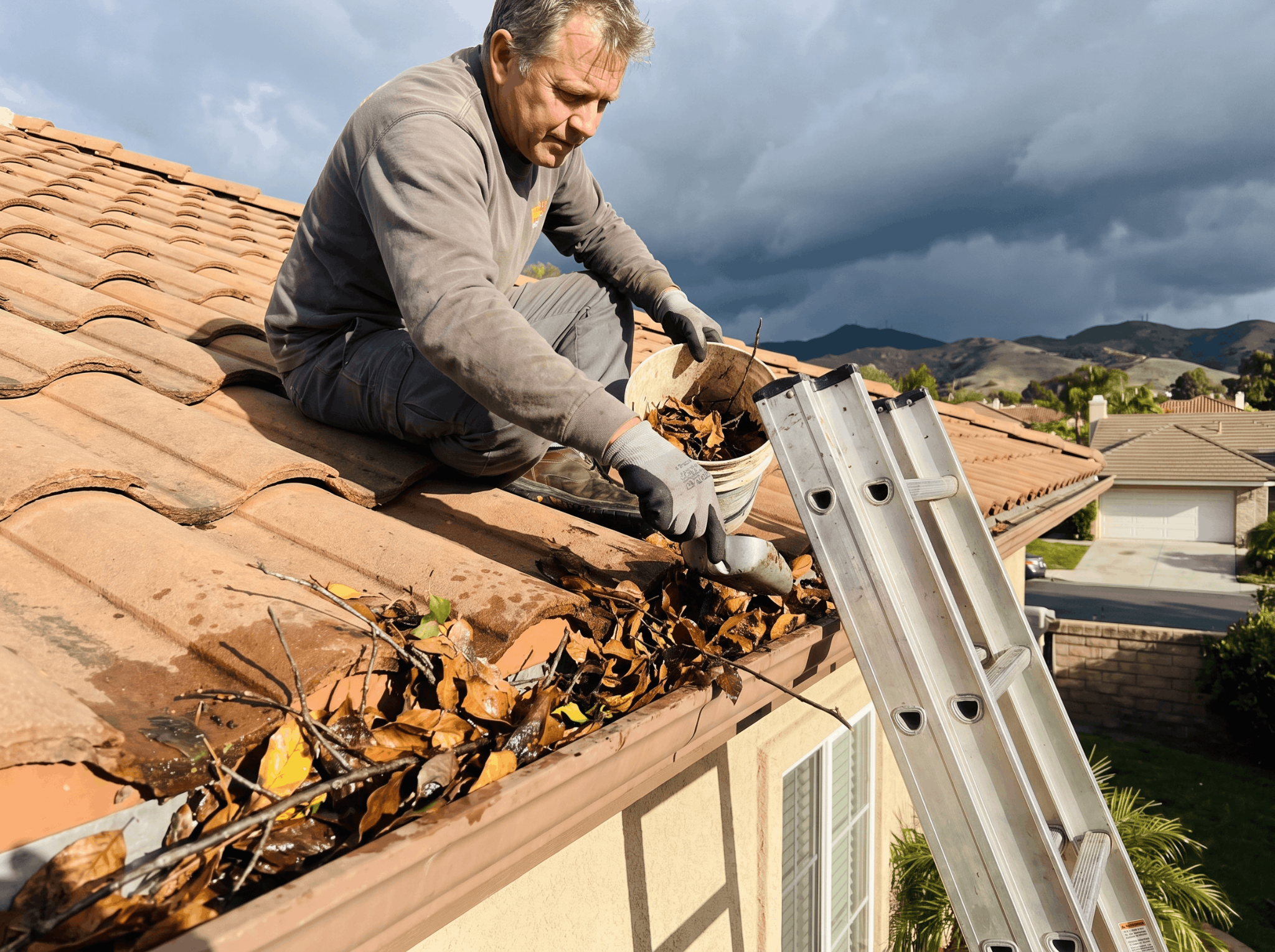
A microburst forms when a pocket of rain-cooled air plunges rapidly from a thunderstorm toward the ground, spreading out violently on impact. The result is a sudden blast of straight-line wind, sometimes exceeding sixty miles per hour, paired with an intense burst of rain, all concentrated over a small area and lasting only minutes. It is a very different threat from the steady, gentle rain Orange County is used to, and homes here are simply not built with it in mind.
That combination of high wind and heavy water is what makes microbursts so damaging. The wind can lift or peel back roof tiles, tear at flashing, and drive rain horizontally under eaves and around windows, while the sheer volume of water overwhelms gutters and downspouts that handle ordinary rain without issue. Once the roof or drainage is compromised, water finds its way into the attic, down through ceilings, and into wall cavities, often without any dramatic sign from the street.
The trend matters because these events are becoming more common as Southern California's weather patterns shift, and they cluster in the late-summer window that includes Labor Day. Homeowners who leave for the long weekend may return to water damage that began hours after they left and spread unchecked the entire time they were gone. Understanding that this risk now exists is the first step toward preparing for it.
The roof and drainage system take the brunt of a microburst. High winds work at the edges and seams of roofing, lifting tiles and loosening flashing, while the downpour dumps more water than gutters can carry. When water overflows or backs up, it pools against the roofline and foundation and seeks any opening. In Orange County's tract homes, this is the most common path from an outdoor storm to indoor water damage.
The danger of a microburst is rarely the wind alone; it is what the wind opens up. A few lifted tiles or a bent piece of flashing may look minor from outside, but each one becomes an entry point for the rain driving in alongside the wind. Water then travels into the attic and down through the structure, turning a brief wind event into a spreading water-damage problem that often is not discovered until it stains a ceiling.
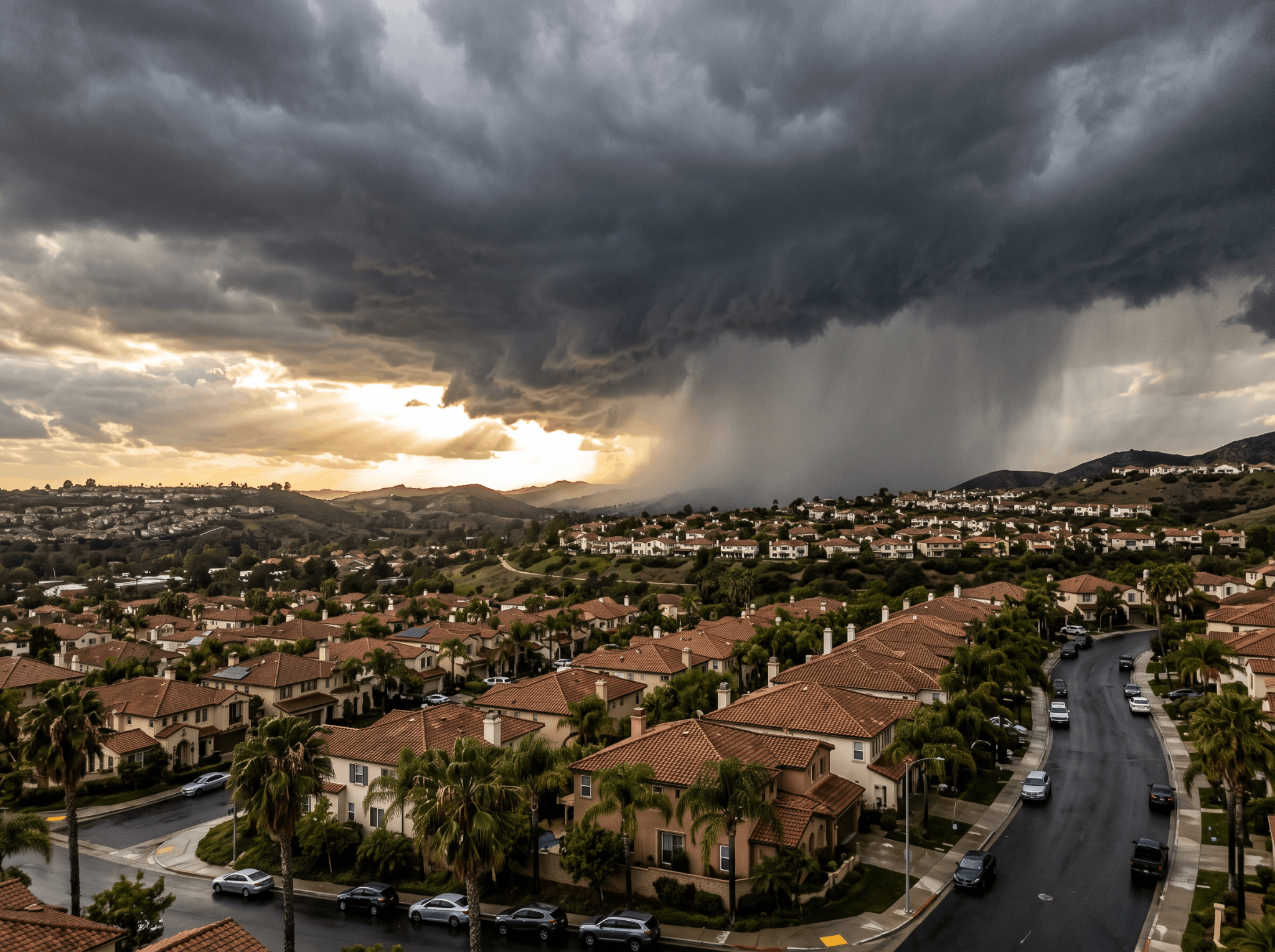
A short walk around your property before you leave for Labor Day can dramatically reduce your risk if a microburst hits while you are away. These five checks address the vulnerabilities these storms exploit most:
None of these takes long, but together they close the gaps a microburst is most likely to exploit. Ten or fifteen minutes before you head out for the weekend can be the difference between coming home to a dry house and coming home to a claim.
One of the most valuable things you can do before a holiday weekend has nothing to do with the storm itself: it is documenting your property's condition beforehand. If a microburst does cause damage while you are away, a clear before-record makes the difference in an insurance claim, and it is a cornerstone of the kind of insurance claim support that gets losses approved.
The reason is simple: insurers need to see that the damage was sudden and storm-caused, not the result of a pre-existing or gradual problem. Timestamped photos and video of your roof, gutters, exterior, and interior taken before you leave establish a clear baseline. If you return to water damage, you can show exactly what changed and when, which removes the ambiguity that carriers often use to question or deny a claim.
Walk the exterior and capture the roofline, gutters, windows, and yard drainage, then do a quick pass through the interior, especially ceilings and rooms below the attic. Store the images with their timestamps intact. It takes only a few minutes, and if a late-summer storm strikes while you are enjoying the holiday, that small record becomes powerful evidence that protects your recovery.
If a microburst does breach your home, understanding when to act quickly makes all the difference. Fast action after storm water intrusion is what limits the damage, which is why reaching a professional restoration team right away matters. The key benefits of responding promptly include:
A ceiling stain, damp drywall, or water tracking down a wall after a storm is a sign to call a professional rather than wait and watch. As an IICRC-certified Orange County crew with a 60-minute response time, Water Gone Restoration can extract the water, dry the structure, and document everything for your claim. When a storm overwhelms a home entirely, our flood cleanup team handles the larger-scale water removal as well.
📞 Call Water Gone Restoration at (949) 406-0287 for 24/7 emergency storm and water damage response across Orange County.
A microburst is a sudden, powerful downdraft from a thunderstorm that produces a brief blast of strong straight-line wind and heavy rain over a small area, lasting only minutes. They are becoming more common in Southern California as regional weather patterns shift, bringing more of these intense, localized storms to areas like Orange County that historically saw dry late summers. Because they arrive with little warning and concentrate wind and water together, they can cause significant roof and water damage in a very short time.
Focus on the vulnerabilities storms exploit most: clear gutters and downspouts so a downpour drains freely, check the roof from the ground for loose tiles or flashing, secure or store outdoor furniture and loose items, confirm the ground drains away from the foundation, and seal gaps around windows and doors. Before leaving for a holiday weekend, also photograph your property inside and out with timestamps. These quick steps close the gaps that lead to water intrusion and give you strong evidence if a storm does cause damage.
Many homeowners policies cover sudden, accidental storm damage, such as wind lifting roof tiles and allowing rain to enter, but coverage depends on your specific policy and on showing the damage was sudden rather than gradual. This is exactly why documentation matters so much: timestamped photos before and after establish that a storm caused the loss. Reviewing your policy and working with a restoration company that documents thoroughly and communicates with your adjuster gives your claim the best chance of approval.
As soon as you discover it, prioritize safety (avoid water near electrical outlets) and then call for professional help quickly, because water spreads and mold can begin within 24 to 48 hours. Document the damage with photos and video before any cleanup, capturing the affected areas and any visible source. Avoid delaying in the hope it will dry on its own, since hidden moisture in walls and subfloors rarely does. Fast extraction and drying limit the damage and strengthen your insurance claim at the same time.
We answer 24/7. Give us your number and a short description of the damage, and an IICRC-certified technician will call you back to schedule a moisture assessment. If it is an emergency, calling is still the fastest route.
.png)
