.svg)
.svg)
.svg)
.svg)
.svg)
By the Water Gone Restoration team · IICRC-certified restoration, Orange County
September 11, 2026
By the Water Gone Restoration team · IICRC-certified restoration, Orange County
September 11, 2026
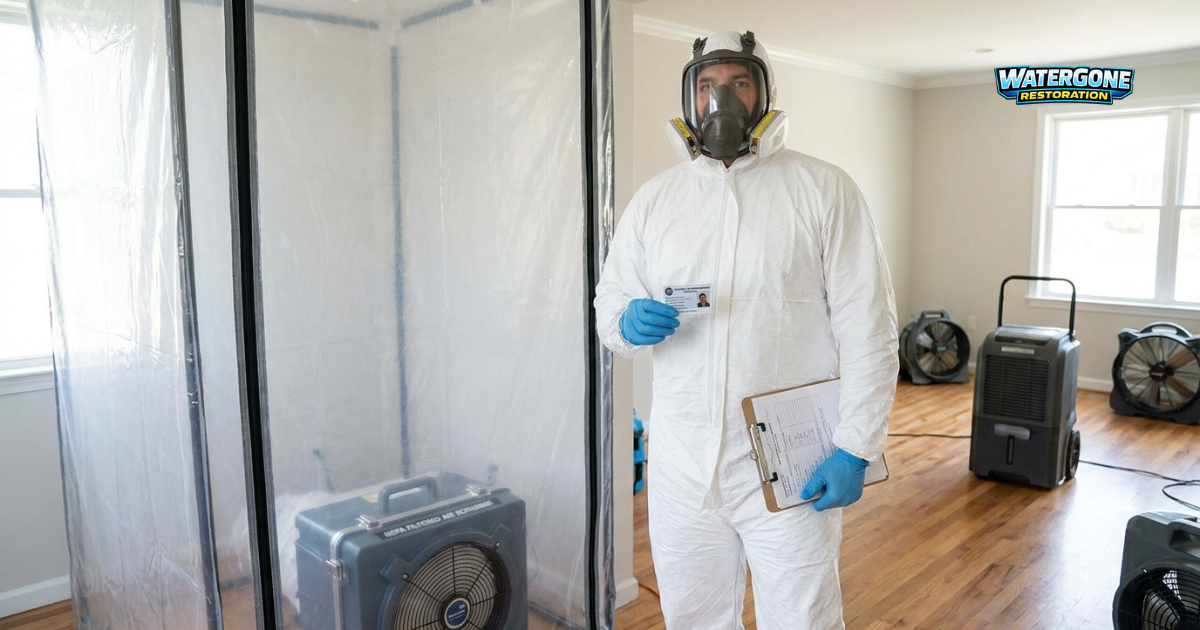
When you start looking for help with a mold problem, you will see the letters "IICRC" on nearly every reputable company's website — but few homeowners actually know what they stand for or why they matter. If you are searching for IICRC certified mold removal in Orange County, it is worth understanding what that certification really means, because it is one of the clearest signals of whether a company is qualified to do the job right and whether your insurance will honor the claim. Certification is not just a logo; it represents training, adherence to a formal standard, and accountability that a homeowner cannot easily verify any other way.
What almost none of those companies explain is what the certification actually requires. In this guide we explain what the IICRC is and what its certifications cover, how certification affects your insurance reimbursement, the red flags that suggest a company is not actually certified, what the AMRT credential means, and — most usefully — how to verify a company's certification status for yourself using official tools.
The IICRC stands for the Institute of Inspection, Cleaning and Restoration Certification, a nonprofit organization that develops the standards and certifications for the inspection, cleaning, and restoration industries. It is an American National Standards Institute (ANSI) accredited standards developer, which means its guidelines are created through a rigorous, consensus-based process rather than being one company's opinion. For a homeowner, the practical meaning is simple: when a company and its technicians are IICRC-certified, they have been trained to a recognized, science-based standard and have agreed to a code of ethics.
The IICRC offers several certifications that matter in restoration work, each tied to a specific type of loss. The most relevant for Orange County homeowners include:
Because water, mold, and fire damage so often overlap in a single loss, a company holding certifications across these areas can handle the whole problem under one roof. Our mold remediation and water damage restoration services are built around exactly these standards.
The specific standard governing professional mold work is the ANSI/IICRC S520, now in its 2024 fourth edition. It is a procedural standard developed by microbiologists, industrial hygienists, public health professionals, and remediation experts, and it defines what proper mold remediation actually looks like — from inspection and containment to removal, cleaning, and verification.
The single most important principle in the S520 is this: physically removing mold contamination is the primary means of remediation — not simply killing it with chemicals. That distinction matters enormously for homeowners, because it is exactly why painting or bleaching over mold does not meet the standard. Proper remediation isolates the affected area, removes the contaminated materials, cleans and treats what remains, and addresses the moisture source. The standard is also recognized at the federal level: mold remediation in military housing is now required to follow the S520, underscoring its status as the national benchmark.
For broader consumer guidance on mold and moisture, the U.S. Environmental Protection Agency (EPA) and the Occupational Safety and Health Administration (OSHA) both publish authoritative information that complements the IICRC standard.
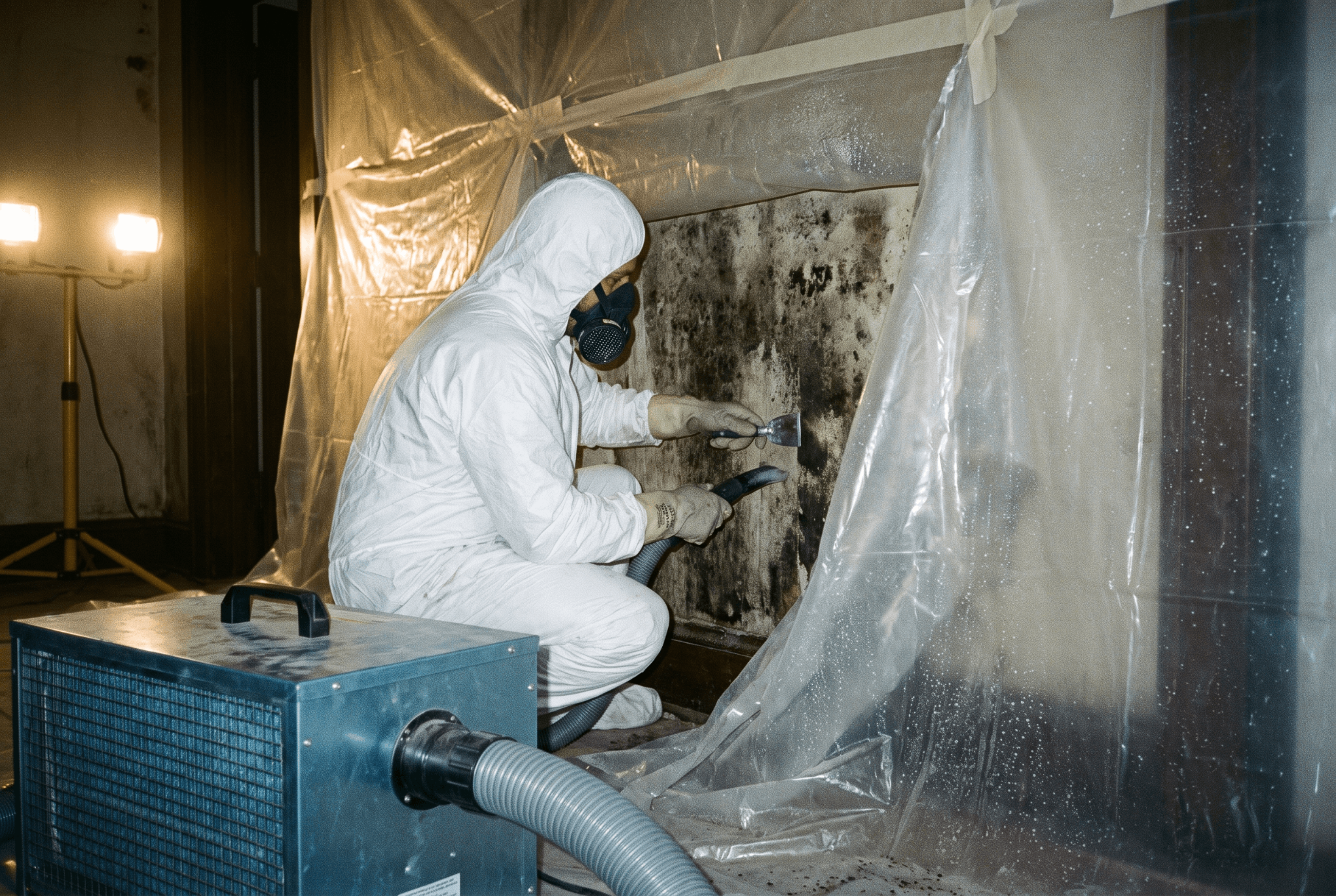
Here is where certification becomes about money, not just quality. Insurance carriers want assurance that remediation was performed correctly and to a recognized standard, and IICRC certification provides exactly that. When a certified firm documents a job following the S520, the carrier can see the work met an industry benchmark — which makes the claim far easier to approve. Uncertified work, by contrast, gives an adjuster a reason to question the scope, the methods, or whether the mold was truly resolved. Because so much of a claim hinges on documentation, treating the job as an insurance claim from day one, backed by certified expertise, is what protects your reimbursement.
There is a practical dimension too. Certified firms are trained to produce the moisture logs, written scopes, and verification records that carriers expect, in the format they expect. That professional documentation is often the difference between a claim that is paid in full and one that is delayed, reduced, or denied. Hiring a certified company is not only about a better cleanup — it is about giving your insurance claim its best chance of full approval.
Among the IICRC certifications, the one most directly tied to mold is the AMRT, or Applied Microbial Remediation Technician. A technician who holds the AMRT has completed training specifically focused on identifying, containing, and remediating mold and other microbial contamination in line with the S520 standard. It covers the science of mold growth, the setup of containment and negative air pressure, the safe removal of contaminated materials, and the verification that the work succeeded.
For a homeowner, an AMRT credential on the crew is a meaningful reassurance that the people in your home are not generalists improvising a cleanup, but technicians trained specifically in mold. It pairs naturally with the WRT and ASD water credentials, since mold almost always begins with a moisture problem — a crew certified across all three can trace the mold back to its water source, dry the structure properly, and remediate the contamination as one coordinated process rather than a series of disconnected fixes.
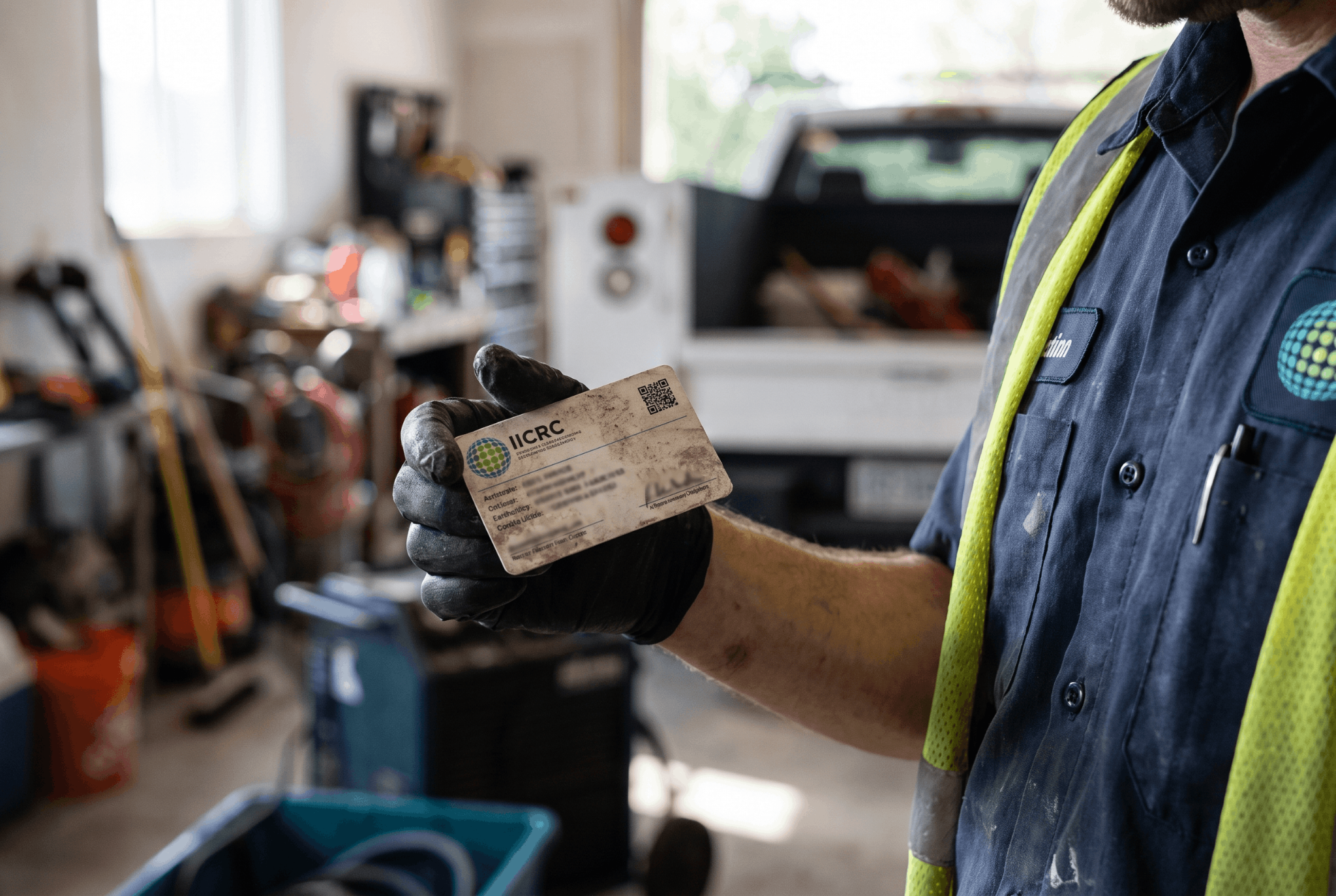
Unfortunately, some companies imply certification they do not actually hold, or let it lapse while still advertising it. When you are vetting a mold company in Orange County, watch for these warning signs:
The best part about IICRC certification is that you do not have to take a company's word for it — you can check for yourself using the organization's official tools. The IICRC provides a Certified Firm Verification tool that lets you confirm whether a business is genuinely a certified firm, and a Global Locator that connects homeowners with certified firms and technicians in their area. Taking two minutes to verify a company before you hire is one of the smartest steps you can take to protect both your home and your claim.
It is also worth understanding what a certified firm status actually requires. An IICRC-certified firm must employ at least one active IICRC-certified technician, maintain the required insurance and any region-specific business licensing, and agree to the IICRC code of ethics and complaint policy. In other words, the designation carries real obligations, not just a fee. When you combine a verified certification with the red-flag checklist above and a clear written scope, you have a reliable picture of whether a company is truly qualified to handle your mold problem to standard.
The IICRC standard for mold is the ANSI/IICRC S520, currently in its 2024 fourth edition. It is a procedural standard, developed with microbiologists and industrial hygienists, that defines proper mold remediation from inspection and containment through removal, cleaning, and verification. Its central principle is that physically removing mold contamination — not just killing it with chemicals — is the primary means of remediation. The S520 is widely regarded as the national benchmark for professional mold work and is even referenced in federal requirements for military housing remediation.
An IICRC certified firm is a business that employs at least one active IICRC-certified technician and has committed to the organization's standards of care. To hold the designation, a firm must maintain required insurance and any region-specific business licensing, and agree to the IICRC code of ethics and complaint policy. For homeowners, it signals that the company has trained staff, follows recognized industry standards, and is accountable to a professional body. You can confirm a firm's status directly through the IICRC's official certified firm verification tool.
Yes. The IICRC is an internationally recognized, ANSI-accredited standards organization, and its standards and certifications are followed in more than 25 countries. It maintains offices and partnerships across the United States, Canada, the United Kingdom, Australia, New Zealand, and Japan, among others. This global recognition means the same science-based benchmarks apply broadly across the inspection, cleaning, and restoration industries, giving the certification credibility well beyond any single region and making it a trusted mark of competence for restoration professionals worldwide.
Individual IICRC certifications are typically earned through focused courses that often run only a few days each, followed by an exam — so a single certification like the AMRT can be completed relatively quickly. Building broad expertise, however, takes longer, as technicians usually stack multiple certifications (water, structural drying, mold, fire) and accumulate hands-on field experience over time. Certifications also require ongoing continuing education to stay current. So while one credential is a matter of days, a genuinely well-rounded, experienced certified technician represents years of training and practice.
Mold removal refers narrowly to physically taking mold off a surface, which can leave spores and the underlying moisture problem behind. Mold remediation is the broader, industry-standard process: inspecting the property, containing the affected area, removing contaminated materials, treating what remains, and fixing the moisture source so the mold does not simply return. Reputable companies, including ours, use remediation because a surface wipe-down without addressing the humidity or leak behind it almost always leads to a repeat problem. The S520 standard is built around this complete, remediation-focused approach.
We answer 24/7. Give us your number and a short description of the damage, and an IICRC-certified technician will call you back to schedule a moisture assessment. If it is an emergency, calling is still the fastest route.
.png)
