.svg)
.svg)
.svg)
.svg)
.svg)
By the Water Gone Restoration team · IICRC-certified restoration, Orange County
October 9, 2026
By the Water Gone Restoration team · IICRC-certified restoration, Orange County
October 9, 2026

The hours immediately after a house fire are disorienting and overwhelming. The flames are out, but your home is left with a complex mix of damage, and what happens next has an outsized effect on how much can be saved and how smoothly your recovery goes. Understanding fire damage emergency response in Irvine, what actually happens in those first six hours, helps homeowners know what to expect and why acting quickly matters so much. Knowing when to call for professional fire and smoke restoration is part of being ready.
A fire event is rarely a single type of damage. It leaves behind a triple threat of soot, smoke, and water, and each one continues to cause harm in the hours after the fire is extinguished. Acting within that first window is what prevents secondary damage from compounding the original loss. At Water Gone Restoration, our crews respond rapidly to fire emergencies across Irvine and Orange County, and this guide walks through the critical first six hours: the safety assessment, emergency board-up, content documentation, adjuster coordination, and the reason fire's combination of soot, smoke, and water makes professional response so important.
Before any cleanup or restoration can begin, the first priority in the aftermath of a fire is safety. A fire-damaged home is a hazardous environment, and the initial hours are about establishing what is safe and what is not, rather than rushing back inside to assess belongings. This assessment shapes everything that follows.
A fire compromises a home in ways that aren't always visible. Structural elements may be weakened, electrical systems can be damaged and dangerous, and the air may hold lingering smoke and hazardous particulate. Water used to extinguish the fire adds slip hazards and can conceal damage beneath it. For these reasons, a home should not be reentered until it has been deemed safe by the fire department, and a professional assessment then identifies the specific hazards that must be managed before restoration work proceeds.
This is also the point at which the scope of the damage begins to come into focus. A trained responder evaluates the extent of the soot, smoke, and water damage, identifies what is stable and what is at risk, and establishes a plan for stabilizing the property. Getting this assessment right at the outset protects both the people involved and the belongings that can still be saved, and it sets the sequence for the work ahead.
The instinct after a fire is to go back inside and start salvaging, but doing so before the home is cleared is genuinely dangerous. Weakened structures, compromised electrical systems, and hazardous air and particulate all pose real risks that aren't obvious to the eye. Waiting for the fire department's clearance and a professional hazard assessment isn't bureaucracy; it is what keeps a bad day from becoming a worse one, and it ensures restoration starts on a safe footing.
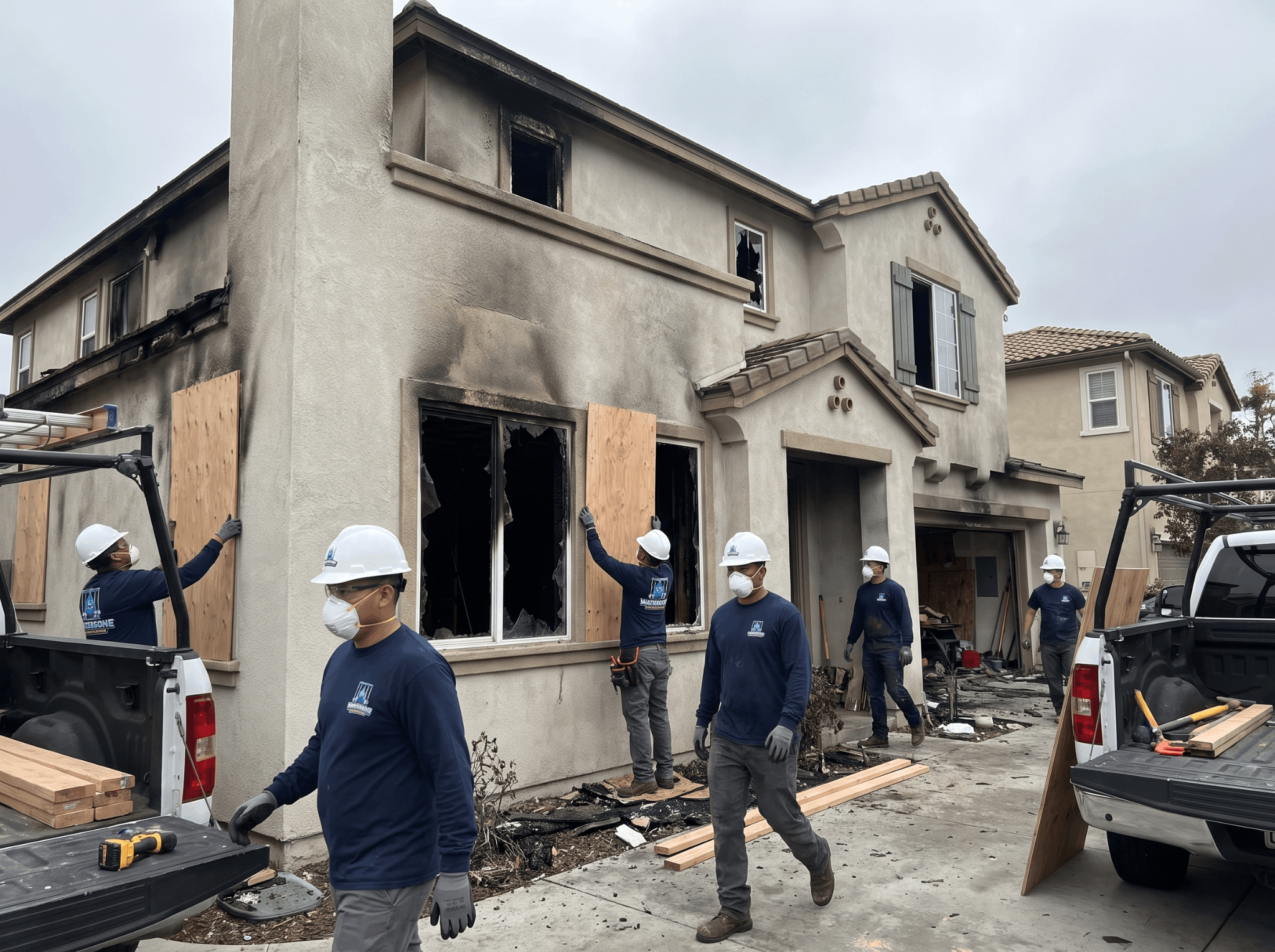
Once a property is deemed safe to work on, one of the first restoration actions is securing it, and this step is more urgent than many homeowners realize. A fire frequently leaves a home open to the elements and to intrusion through broken windows, holes in the roof, and compromised doors. Emergency board-up and tarping close those openings, and they are a critical part of preventing the water damage restoration that so often follows a fire as a secondary loss.
The danger of an unsecured fire-damaged home is twofold. First, the openings expose the interior to weather: rain entering through a compromised roof can cause extensive water damage on top of the fire damage, and even Orange County's occasional storms can worsen an already difficult situation. Second, an open home is vulnerable to intrusion and further loss of belongings. Boarding up windows and doors and tarping roof openings addresses both, sealing the home against additional harm.
This is why board-up happens early, before the detailed cleanup begins. Every hour a fire-damaged home sits open is an hour it can take on new damage that complicates the restoration and inflates the loss. Securing the structure promptly protects the work that follows and prevents the frustrating scenario of secondary water damage undoing progress or adding an entirely new dimension to the claim.
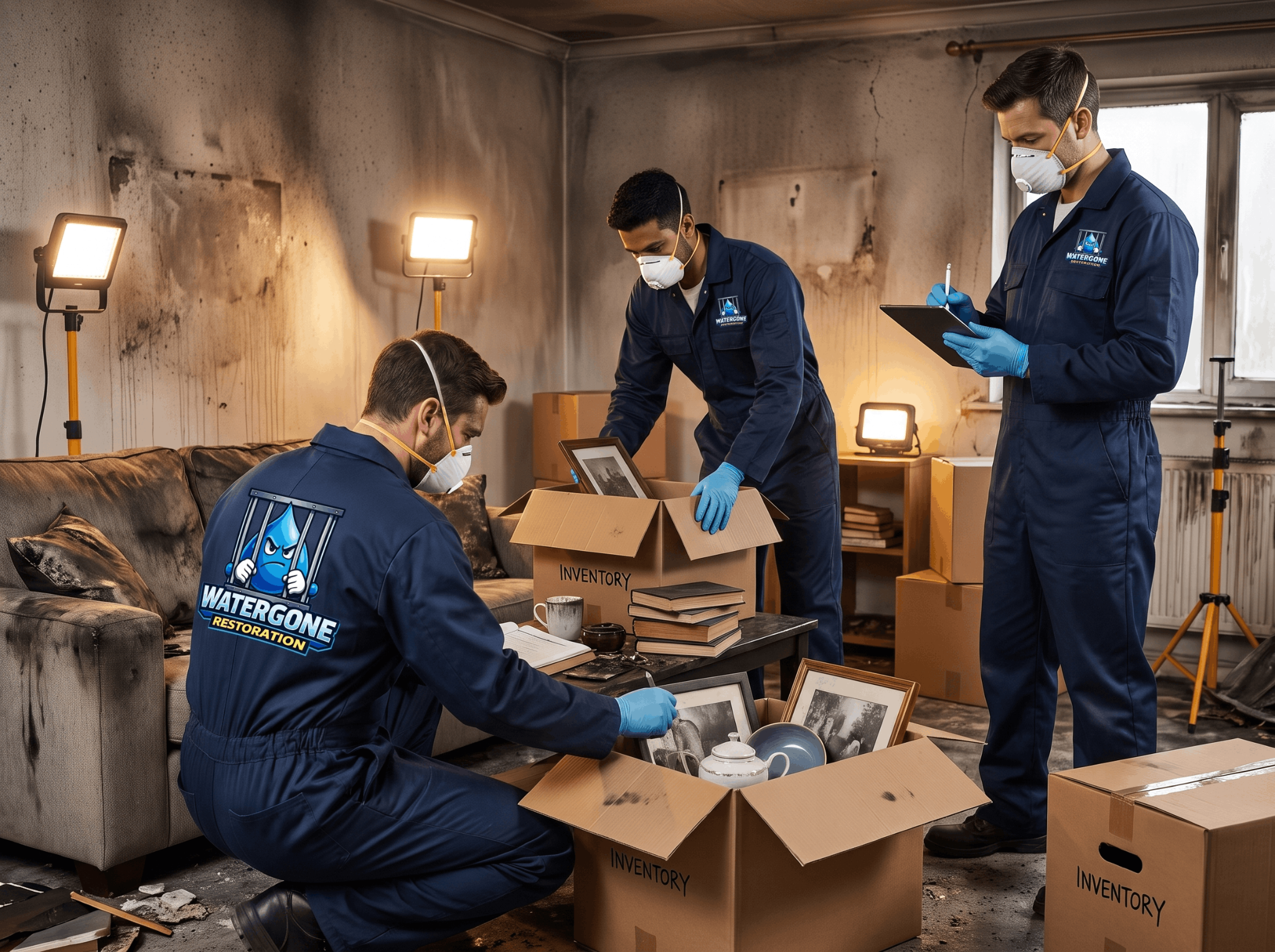
With the home stabilized and secured, attention turns to its contents: the belongings inside. In many fire events, these items need to be removed from the property both to protect them from ongoing damage and to allow the structural cleanup to proceed. This process, known as pack-out, is handled with careful documentation for a reason. The steps involved include:
This careful, documented approach protects both the belongings and the homeowner's interests. The inventory created during pack-out is often invaluable when it comes to the insurance claim, providing a clear, organized record of the contents affected by the fire, exactly the kind of evidence that supports full recovery.
Running alongside the physical response in those first hours is a parallel process of coordination with fire officials and with your insurance company. Getting this right early sets the tone for the entire claim, and it is where a restoration company's insurance claim support proves its value from the very start.
On the official side, the fire marshal or fire department may need to investigate the cause and origin of the fire, and the restoration process is coordinated around that. On the insurance side, the claim should be opened promptly, and this is where thorough early documentation becomes critical. Every photo of the damage, every note on the affected areas, and the contents inventory all feed a claim file that an adjuster can act on. A restoration company that documents from the outset and communicates directly with the adjuster keeps the process organized and moving.
This coordination matters because fire claims are complex, involving structure, contents, and often additional living expenses. A disorganized or poorly documented start can lead to delays and disputes down the line, while a well-documented, well-coordinated one gives the homeowner the strongest footing. Having a professional manage the documentation and adjuster communication from hour one lets the homeowner focus on their family and recovery rather than paperwork during an incredibly stressful time.
What makes fire restoration uniquely challenging, and professional response so important, is that a fire never leaves just one kind of damage. It leaves three, each requiring different expertise, and each continuing to cause harm after the flames are gone. Understanding this triple threat explains why the first hours matter so much:
Each of these worsens with time, and each demands its own approach, which is precisely why a fast, comprehensive professional response is so valuable. Addressing soot, smoke, and water together, in the right sequence, is what prevents one problem from compounding the others. When the water component is significant, the same crew's water damage restoration expertise ensures that side of the loss is handled properly rather than left to become a second disaster.
📞 Call Water Gone Restoration at (949) 406-0287 for 24/7 emergency fire damage response in Irvine and across Orange County.
First, prioritize safety: do not reenter the home until the fire department has cleared it, since fire weakens structures and damages electrical systems in ways that aren't visible. Once it's safe, the priorities are securing the property with emergency board-up and tarping to prevent secondary damage, beginning documentation for your insurance claim, and contacting a professional restoration company. Acting quickly matters because soot, smoke, and water all continue causing damage after the flames are out. A professional fire damage emergency response crew can manage the stabilization, documentation, and adjuster coordination for you.
A fire often leaves a home open through broken windows, roof holes, and damaged doors, and an unsecured home is exposed to two serious risks: weather and intrusion. Rain entering through a compromised roof can cause extensive water damage on top of the fire damage, and an open home is vulnerable to further loss of belongings. Emergency board-up and tarping seal these openings, preventing secondary damage that would otherwise complicate the restoration and inflate the loss. It's done early, before detailed cleanup, precisely to protect the work that follows.
A content pack-out is the process of removing your belongings from a fire-damaged home, both to protect salvageable items from ongoing soot, smoke, and moisture damage and to allow crews to properly clean and restore the structure. As items are packed, they are inventoried and photographed, creating a detailed record of what was affected and its condition. This inventory is invaluable for the personal-property portion of your insurance claim. Pack-out lets restoration proceed on the structure itself, which can't be done thoroughly around a home still full of contents.
Because the water used to extinguish the fire saturates the home. Firefighting can introduce a large volume of water that soaks into structural materials, flooring, and contents, and if it isn't extracted and dried quickly, it causes its own damage and creates ideal conditions for mold, which can begin within 24 to 48 hours. This is why fire restoration is a triple threat of soot, smoke, and water, and why a restoration company with water damage expertise is important: the water component has to be addressed promptly alongside the fire damage, not left to become a second problem.
We answer 24/7. Give us your number and a short description of the damage, and an IICRC-certified technician will call you back to schedule a moisture assessment. If it is an emergency, calling is still the fastest route.
.png)
